

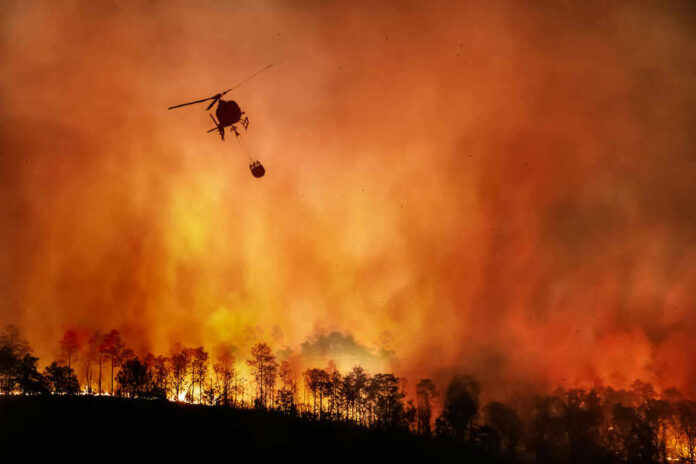
Massive wildfires tearing through South Florida’s Everglades have scorched over 11,000 acres and grown so large they’re visible from space, exposing how federal land mismanagement and environmental policies have left America’s natural treasures vulnerable to catastrophic destruction.
Story Snapshot
- Two major wildfires erupted near the Miami-Dade/Broward county border on May 10, rapidly expanding from 5,000 to over 11,000 acres within 24 hours
- The blaze grew large enough to be detected by satellites, threatening homes in Pembroke Pines and Florida City while creating hazardous air quality conditions
- Prolonged drought and dry conditions turned the Everglades into a tinderbox, part of Florida’s particularly active 2026 fire season with dozens of fires burning statewide
- Firefighters achieved 60% containment by May 11 evening with no structures lost or injuries reported, though residents prepared for potential evacuations
Drought-Fueled Inferno Threatens Urban Communities
The wildfire ignited near North Krome Avenue and NW 186th Street on Sunday evening, May 10, 2026, along the boundary between Miami-Dade and Broward counties. Strong winds and tinder-dry vegetation from an extended drought allowed flames to spread rapidly through sawgrass prairies and peat soils characteristic of the Everglades ecosystem. Within hours, the fire had consumed approximately 5,000 acres and continued expanding overnight. By May 11 evening, acreage estimates exceeded 11,000 as firefighters battled what officials described as massive flames creeping dangerously close to residential areas in Pembroke Pines and Florida City, raising concerns about property protection in these densely populated suburban communities.
Satellite Detection Reveals Unprecedented Scale
The Everglades blaze reached such intensity that satellite imagery from the Cooperative Institute for Research in the Atmosphere captured the fire’s thermal signature from space. This scale of detection underscores the severity of conditions facing Florida in 2026, as the state experiences what experts characterize as a particularly active fire season. The Everglades region’s subtropical climate typically alternates between wet and dry seasons, with spring months from February through May historically prone to wildfires before summer rains arrive. However, this year’s prolonged heatwave and widespread drought transformed the normally resilient greenery into what one official described as a matchbox waiting for ignition, creating conditions that have strained firefighting resources across the entire state.
Multi-Agency Response Battles Multiple Fronts
The Florida Forest Service coordinated the lead response, working alongside Miami-Dade Fire Rescue and Broward County firefighters to deploy aerial water drops and establish ground containment lines. Initial reports on May 11 morning showed containment at approximately 20 percent with multi-agency crews working around the clock. By evening, firefighters had improved containment to 60 percent despite the fire’s continued growth. Officials issued road closures and urged motorists to avoid the area after traffic jams developed from curious onlookers stopping along highways to photograph the flames. Air quality alerts warned residents about smoke drifting into nearby neighborhoods, though no mandatory evacuations were ordered. The coordinated effort demonstrated effective state and local cooperation, yet the incident remains one of dozens of active fires burning simultaneously across Florida.
Statewide Fire Crisis Strains Resources
The South Florida wildfires represent just one flashpoint in a broader crisis affecting communities from Hillsborough County to the southern tip of the peninsula. Earlier in spring 2026, the Highway 41 Fire scorched thousands of acres within Everglades National Park, establishing a pattern of large-scale burns driven by exceptional drought conditions. Tens of thousands of acres have burned statewide as of mid-May, placing unprecedented demands on firefighting personnel and equipment. The cause of the Miami-Dade/Broward blaze remains under investigation, with officials examining whether human activity contributed to ignition or if natural weather conditions alone sparked the flames. Peat soils in the Everglades can smolder for extended periods once ignited, potentially causing long-term ecosystem damage and delaying complete extinguishment even after visible flames subside.
Economic and Environmental Consequences Mount
Beyond immediate firefighting costs and traffic disruptions, the wildfires threaten long-term economic impacts including potential tourism declines near the affected Everglades areas and pressure on state budgets already strained by managing multiple simultaneous fire incidents. The Everglades ecosystem, recognized as a critical biodiversity hotspot, faces uncertain recovery timelines depending on the extent of peat soil damage and wildlife habitat destruction. While no structures have been lost and no injuries reported through May 11, residents in Pembroke Pines and Florida City experienced anxiety preparing for potential evacuations as flames advanced toward the urban-wildland interface. The 2026 fire season highlights ongoing challenges in managing natural resources and protecting communities at risk from predictable seasonal hazards exacerbated by weather extremes and land management decisions.
Sources:
Watch: Massive wildfire rages across Florida’s Everglades. It’s visible from space – India Today
Firefighters battle massive Everglades wildfires near homes in South Florida – CBS News Miami