
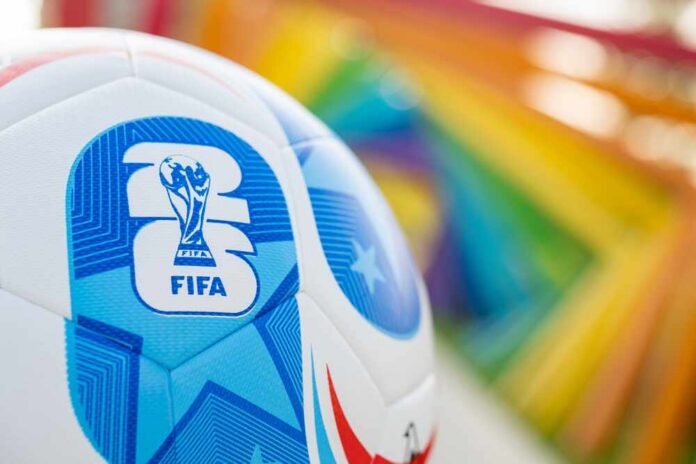
NASA sent the 2026 World Cup ball into space, and the stunt carries a real research edge that many readers will appreciate.
Quick Take
- NASA used the official 2026 FIFA World Cup ball aboard the International Space Station to study balance and motion in microgravity.
- NASA said the station research helped shape studies used in the ball’s development and evaluation.
- The agency also said it recreated a 2019 experiment with the Adidas Trionda ball to show the effect of good and bad balance.
- Critics may call the event a publicity stunt, but the public records show a mix of outreach and applied science.
Why NASA Took the Ball to Orbit
NASA said researchers on the International Space Station used microgravity to study how a soccer ball’s internal mass affects motion, stability, and rotation. Without gravity pulling on the ball, scientists can isolate balance problems that are harder to see on Earth. That matters because a ball that looks fine in a lab can still behave badly in play if its mass is uneven.
NASA and European Space Agency astronauts later used the official FIFA World Cup ball in the Kibo module for a zero-gravity kickoff, turning the research into a public showpiece. NASA also shared that Jessica Meir explained how a soccer ball in microgravity can pass a balanced mass distribution test. The agency’s own wording ties the spectacle to sports engineering, not just entertainment.
What the 2019 Research Added
NASA said the space station work from 2019 helped improve understanding of how embedded technologies, including match-ball sensors, can affect performance during play. WRAL reported that the researchers used microgravity to study how a ball’s internal mass affects its motion, stability, and rotation. That is the core science here: test the ball in space, where gravity no longer hides the internal balance problem.
The NASA and Adidas presentation also says the crew recreated a 2019 experiment with the 2026 Trionda to compare well-balanced and poorly balanced balls. The claim is strong on demonstration value, but the available material does not include a full technical report, sensor specification sheet, or engineering standard. That leaves room for questions, even if the basic experiment itself is plainly documented.
Why the Story Still Matters on Earth
For everyday fans, the biggest takeaway is simple. World Cup balls are not just stitched panels and paint anymore. NASA said modern tournament balls can include electronics, and the research was meant to help explain how those changes affect balance and rotation. If the internal mass is off, the ball can behave differently in flight, which matters in a sport decided by small margins.
Some readers will still see this as a branding exercise, and that criticism is easy to understand. Space.com described the event as a microgravity kickoff and emphasized the fun side of the story. But the facts in the public record show a second layer: NASA used the ball, the station, and the crew to explain a real engineering problem in a way ordinary people could follow.
What Is Missing From the Public Record
The open material leaves out several details that would satisfy a harder technical review. The reports provided do not name the original 2019 study, give contract terms for the NASA-FIFA collaboration, or show a peer-reviewed paper tied to the new ball demonstration. That does not erase the experiment, but it does limit how far anyone should push the conclusions.
Even so, the central facts are clear. NASA put the 2026 World Cup ball in orbit, used microgravity to study balance, and linked that work to ball design and embedded sensor effects. For supporters of practical science, that is a rare case where a flashy public event still points back to a real engineering lesson.
Sources:
science.nasa.gov, space.com, instagram.com, nasa.gov