
Federal control over National Guard troops in Washington is sparking new backlash from Democratic-run states, and raising big questions about who really commands America’s citizen soldiers.
Story Snapshot
- More than 4,000 National Guard troops now operate in Washington under a joint federal task force structure.
- Democratic states like Minnesota say their Guard members were sent for America 250 celebrations, not long-term law enforcement.
- Legal filings claim the Pentagon holds “pervasive” control over state troops, leaving governors with almost no say.
- Courts have already ruled parts of Trump’s Guard deployments illegal, fueling a wider constitutional showdown.
Guard Surge in Washington Blurs Lines Between Celebration and Policing
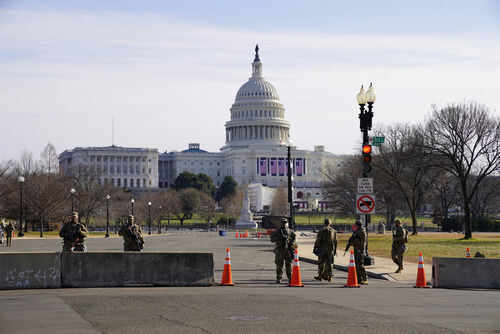
More than 4,000 National Guard troops are now on duty in Washington, D.C., as the city moves through America 250 celebrations and an ongoing federal “summer surge” against crime. These troops come from the District of Columbia and at least six states, including Democratic-led Minnesota and Michigan, and operate under Joint Task Force – District of Columbia in support of local and federal authorities. Their official mission includes crowd management, traffic control, and protecting public movement during major events, but they can detain suspects until police arrive, putting them close to everyday law enforcement.
For many conservative readers, the basic issue is familiar: Washington has become a permanent “security zone,” and the Guard is being used as a visible tool of federal power. President Trump declared a crime emergency in the capital and activated the Guard back in 2025, promising to restore law and order in a city where local leaders had long failed to protect residents. Since then, deployments have grown, with troop numbers doubling ahead of July Fourth and America 250, and the mission extended into late 2026 by an Army Secretary memo citing “ongoing efforts to restore law and order.”
Democratic States Push Back on Federal Control of Their Troops
Democratic governors who sent Guard units to Washington say they agreed to support America 250 ceremonies, not indefinite law enforcement operations. Minnesota officials told reporters their soldiers were only authorized for “America 250 purposes and not anything political or executive,” trying to draw a clear line between patriotic celebration and day-to-day policing. Yet a spokesperson for the Joint Task Force admitted that all Guard members in Washington are under a single operational structure, meaning federal commanders set daily tasks, even though the troops technically remain in state status under Title 32.
That structure worries state leaders who already distrust Washington’s habit of mission creep. A lawsuit filed by the District of Columbia attorney general alleges the Pentagon is exercising “pervasive control” over all Guard troops in the city, leaving governors and their adjutant generals with “no meaningful direction or command.” The filing argues that what began as support for celebrations has quietly shifted into a long-running, quasi-policing role, without clear consent from the states sending soldiers. So far, there is no public evidence of Minnesota or Michigan pulling their units out, but the tension highlights how little leverage states have once their troops are on the ground near the federal core.
Court Rulings and Crime Data Undercut the Case for a Permanent Guard Presence
Federal courts have already thrown cold water on parts of Trump’s broader deployment strategy, which gives ammunition to critics of the Washington surge. A federal district judge ruled that the administration lacked authority to send National Guard troops into the capital “for the deterrence of crime” and ordered an earlier deployment ended. The Supreme Court went further in Trump v. Illinois, blocking a separate attempt to use a key federal law, 10 United States Code section 12406, because there was no evidence of “rebellion or danger of rebellion” that regular forces could not handle. These decisions do not directly cancel the current D.C. operation, but they raise hard questions about the legal basis for using the Guard as a routine crime-fighting tool.
I didn’t see violent teens firing fireworks at police and people like years past in D. C. It was because the National Guard, but the liberals do not care that people are safer.
— Tamara66949263 (@Tamara39224) July 6, 2026
Real-world results also look shaky. A detailed study by the Niskanen Center found that the presence of more than 2,000 Guard troops in Washington had “no measurable effect” on violent crime, calling the deployment an “expensive tool” used in “the wrong places for the wrong types of crime.” Researchers pointed to the high daily cost of each Guard member compared with regular police officers, suggesting taxpayers are funding a show of force more than real safety gains. Even as some media repeat claims that crime is down thanks to the Guard, data like this makes many Americans wonder if the mission is more political theater than public protection.
Why This Fight Matters for Constitutional Balance and Local Control
Behind the immediate dispute is a bigger constitutional battle over who controls the National Guard and when Washington can send troops into communities without local consent. History shows presidents and governors have clashed over Guard deployments for more than 200 years, with recent fights in California, Illinois, and Oregon during Trump’s second term centering on whether the White House used troops to enforce immigration and crack down on protests against local wishes. Analysts warn that today’s D.C. mission fits a pattern where federal officials stretch emergency laws and Title 32 status to build long-running, federally directed Guard operations in Democratic cities.
For conservatives who care about the Constitution, this story is not simply “blue states versus Trump.” It is another sign that the federal government, backed by big-city elites, wants to turn the citizen-soldier force into a flexible domestic police backup whenever it suits Washington’s agenda. When state leaders from both parties, and judges across the country, say the line has been crossed, it should raise red flags about mission creep, unchecked executive power, and the slow erosion of local control. Whether you cheer Trump’s push for law and order or not, this fight over the Guard in Washington will help decide how much say your governor — and by extension, your community — really has when the troops roll in.
Sources:
youtube.com, npr.org, afro.com, abcnews.com, nytimes.com, instagram.com, politico.com, brennancenter.org, movementlawlab.org, whitehouse.gov, protectdemocracy.org, britannica.com, pbs.org