
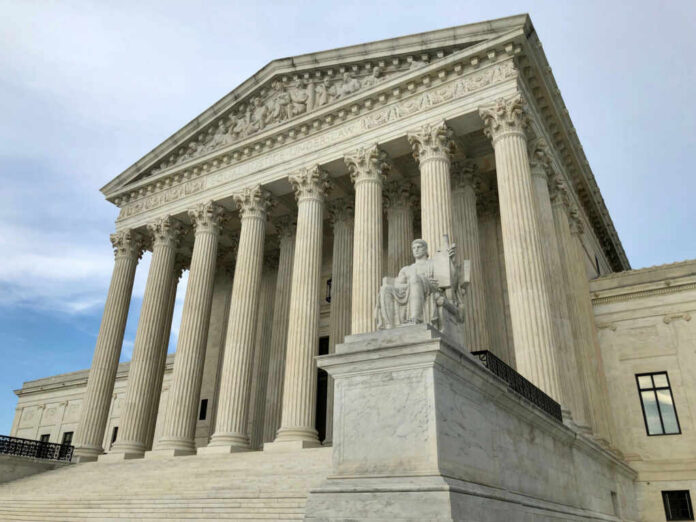
The Supreme Court just tore down a 91‑year barrier and handed the President direct control over powerful “independent” agencies that have long driven the left’s regulatory agenda.
Story Snapshot
- The Supreme Court ruled 6–3 in Trump v. Slaughter that limits on firing Federal Trade Commission commissioners are unconstitutional.
- Chief Justice John Roberts’s opinion overruled the 1935 Humphrey’s Executor precedent that protected many “independent” agency heads from at‑will removal.
- The decision greatly expands presidential authority to remove and replace officials who enforce federal law, aligning with the unitary executive view of Article II.
- Future presidents of either party can now swiftly clean out hostile appointees across most independent agencies and install accountable leadership.
Supreme Court Clears Trump’s Firing of FTC Commissioner Rebecca Slaughter
On June 29, 2026, the Supreme Court decided Trump v. Slaughter, a major separation‑of‑powers case about who controls the Federal Trade Commission. The fight started when President Trump, early in his second term, removed Democratic commissioner Rebecca Slaughter before her fixed term ended, even though federal law said commissioners could be fired only for “inefficiency, neglect of duty, or malfeasance in office.” A district court called Trump’s firing unlawful and ordered Slaughter reinstated, but the Supreme Court has now reversed that ruling.
Chief Justice John Roberts wrote the majority opinion, joined by five other justices, including Justice Clarence Thomas for most of the decision. The Court held that the Federal Trade Commission’s for‑cause removal protection violates the Constitution’s separation of powers because it blocks the President from removing top executive officials who wield government power in his name. The ruling means the President may dismiss commissioners of the Federal Trade Commission at will, without having to prove misconduct or poor performance first.
Court Overrules Humphrey’s Executor and Embraces Strong Presidential Control
This case matters far beyond one commissioner’s job because it directly overrules Humphrey’s Executor v. United States, the 1935 decision that had limited presidents to firing certain agency officials only for specific cause. For nearly a century, Humphrey’s Executor gave Congress cover to build independent agencies with leaders shielded from normal political accountability. Roberts’s opinion says that logic has “not withstood the test of time” and declares that if any part of Humphrey’s Executor still remained, “we overrule it,” fully clearing it out of modern law.
By striking down these protections, the Court effectively endorses a strong version of the unitary executive theory, which holds that all executive power sits with the President under Article II. Under this view, the President must be able to direct and remove executive officers so voters can know who to blame or praise for federal policy. Legal analysts note that the Slaughter ruling continues a long trend in recent Supreme Court cases that move power from unelected boards and commissions back toward elected presidents.
What This Means for the Administrative State and Future Presidents
Legal and policy experts agree the Trump v. Slaughter decision will reshape how independent agencies work going forward. For decades, agencies like the Federal Trade Commission, the National Labor Relations Board, and the Equal Employment Opportunity Commission operated with a degree of insulation from the White House, often advancing aggressive regulatory and labor policies that outlasted elections. The Court has now said Congress generally cannot shield leaders of these executive agencies from presidential removal through for‑cause statutes, greatly expanding direct presidential authority over their leadership.
"Neither Congress nor the courts may saddle [the President] with those with whom he cannot work." — Chief Justice Roberts, writing for the Court in Trump v. Slaughter.
NCLA has been saying for years that Humphrey’s Executor, a 1935 Supreme Court case that has allowed federal…
— New Civil Liberties Alliance (@NCLAlegal) July 8, 2026
One practical result is clear: future presidents will have much greater power to remove officials appointed by prior administrations and install people who match their own policy goals. That cuts both ways politically, but it also makes the federal bureaucracy more directly answerable to the voters who choose the President. The Court did hint at a narrow exception for unique institutions like the Federal Reserve, but for most agencies the age of entrenched, semi‑independent boards is over and a new era of presidential control has begun.
Sources:
reason.com, media.cadc.uscourts.gov, facebook.com, law.cornell.edu