

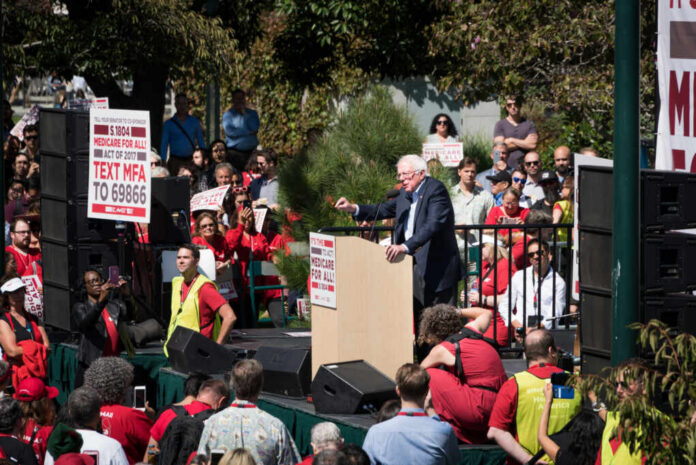
Bernie Sanders just accused his own party of serving billionaire donors over working families, and top Democrats are furious because he is exposing the game from the inside.
Story Snapshot
- Bernie Sanders says Democrat leaders chose corporate money over working-class voters starting in the 1970s.
- His “Fighting Oligarchy” push claims both parties now serve a small wealthy elite, not everyday Americans.
- Election data show Democrats still win many union and minority workers, but their working-class base has shrunk.
- This civil war on the left reveals how deeply money and consultants drive policy, messaging, and culture wars.
Sanders Says Democrats Sold Out Workers for Billionaire Cash
Senator Bernie Sanders told the New York Times that Democratic Party leaders turned toward corporations and the wealthy in the early 1970s and that this shift has been “disastrous” for the country and for the party itself. He argues the party once stood for working people but now leans on billionaire donors and high-priced consultants, leaving many blue-collar Americans feeling ignored and betrayed. He says many voters now see Democrats as an elitist club, not a movement for workers.
Sanders’ charge hits a nerve because it comes from the left, not from conservatives. He is not saying Democrats are just mistaken on policy; he is saying the party has been captured by an oligarchy, a small group of ultra-rich donors and power brokers. He warns that unless Democrats ban dark money and rebuild a real grassroots base, they will keep losing working-class voters to populist candidates who at least talk about jobs, wages, and the cost of living.
Inside His ‘Fighting Oligarchy’ Campaign Against Billionaire Power
Sanders has turned this attack on oligarchy into a national campaign, including a “Fighting Oligarchy” tour that draws large crowds across the country. At rallies, he blasts billionaires, corporate power, media monopolies, and the “Citizens United” ruling that opened the floodgates for unlimited election spending by super political action committees. He warns that the top one percent holds more wealth than most Americans combined, while families struggle with wages, housing, and healthcare costs.
His tour pushes classic big-government answers: a wealth tax on billionaires, Medicare for All, and more federal programs. That message excites many progressives who want to punish the rich and expand Washington’s reach. But it also highlights a deeper truth most conservatives know well: both parties allowed massive money and lobbyists to twist the system for decades. Studies of policy outcomes show government often responds to economic elites and organized interests over average citizens, reinforcing Sanders’ warning that America functions more like an oligarchy than a true republic.
Why Democrat Leaders and Strategists Are Pushing Back Hard
Party strategists and aligned think tanks respond by saying Sanders is oversimplifying the picture. A Brookings Institution analysis of the 2024 election notes that Kamala Harris still won majorities among many blue-collar Black and Latino voters, and she beat Donald Trump among union workers by a wide 57 to 41 percent margin. Analysts also point out that Democrats who stress “pro-worker” and “pro-family” themes often perform better at the ballot box than those who ignore those messages.
Other researchers argue that lower-income white voters have not fled Democrats as much as people think; instead, wealthier and more educated elites have moved left over the last forty years. A study from the Center for Politics claims ideology, not pure economic anger, drove many white working-class voters to the Republican Party, especially those who hold conservative views on culture, faith, and patriotism. That research suggests Sanders is right about economic pain but wrong to think more redistribution alone will win those voters back.
Evidence of a Long, Slow Working-Class Erosion on the Left
Even friendly data still show a problem Sanders is tapping into. Political science work on party coalitions finds that the share of working-class voters inside the Democratic Party has fallen from a clear majority in the mid-twentieth century to roughly one-third today. At the same time, Democrats now rely more on college-educated professionals and upper-middle-class urban voters, who often push identity politics and climate agendas that do not match blue-collar priorities.
Platner’s Rise and Fall Revives Old Questions About ‘Bernie Bros’ and Women
The collapse of Graham Platner’s Senate bid in Maine after a rape allegation renewed attention to a movement built by Senator Bernie Sanders that some say is too forgiving of male misconduct.By Patricia…
— B.P. Majors 🐍🗽🔯 (@MajorsBruc34400) July 11, 2026
Survey research of working-class Americans shows their top concerns are clear: getting tougher on illegal immigration, growing the economy, cutting wasteful spending, lowering medical costs, and helping small businesses. Only a small minority say they want a larger federal government focused on fighting inequality. That gap shows why many working people do not buy Sanders-style socialism but still feel Democrats ignore their real-world struggles and values, from border security to energy prices.
Why This Left-Wing Civil War Matters for Conservative Voters
The Sanders fight with Democratic leaders puts their core weakness on full display. On one side, party insiders defend a model built on big donors, consultants, and activist causes. On the other, Sanders blasts the same machine for serving an oligarchy instead of truck drivers, nurses, and welders. Both sides still push more federal control, more spending, and more regulation, but they disagree over which slogans will keep their coalition together.
For conservatives, this chaos is a warning and an opportunity. It confirms what many on the right have argued for years: centralized power in Washington breeds corruption, and both parties have too often catered to the rich and well-connected. The answer is not Sanders’ bigger government, wealth taxes, and permanent class warfare. The answer is to shrink federal overreach, secure the border, protect energy independence, stop runaway debt, and return power to families, communities, and states while keeping our constitutional rights safe from elites of every stripe.
Sources:
townhall.com, nytimes.com, stonecenter.gc.cuny.edu, aei.org, theconversation.com, statsandsociety.substack.com, brookings.edu, centerforpolitics.org, liberalpatriot.com, hks.harvard.edu