
A single heckler’s “dead people” shout at a JD Vance campus event has become the latest flashpoint in a country where politics now regularly spills into intimidation, viral clips, and zero-sum distrust.
Story Snapshot
- Vice President JD Vance faced heckling at a Turning Point USA event in Athens, Georgia, where a shouted reference to “dead people” helped spark a laugh from parts of the crowd.
- Reports describe a sparsely attended venue and competing narratives online—supporters framing composure, critics highlighting low turnout and awkward moments.
- The episode landed amid heightened tensions after the assassination of TPUSA founder Charlie Kirk, which Vance discussed publicly in subsequent media appearances.
- Vance’s message rejecting “unity” with anyone celebrating political violence underscores how quickly today’s political culture hardens into camps.
What happened at the Athens TPUSA stop—and why the clip spread
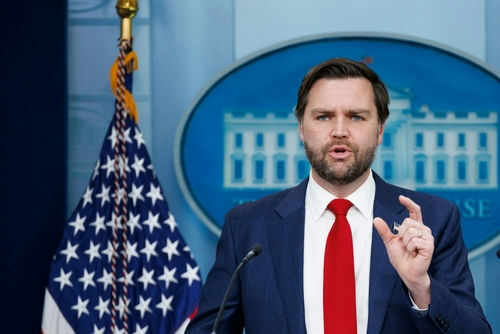
Vice President JD Vance appeared at a Turning Point USA stop tied to its campus programming in Athens, Georgia, where he took questions and confronted vocal interruptions. Accounts of the heckling include anti-war accusations and at least one audience shout referencing “dead people,” a phrase that online viewers quickly tied to long-running arguments about election integrity. The moment’s staying power came less from policy detail than from the familiar pattern: protest, reaction, and instant clip warfare.
Coverage of the event also emphasized optics—particularly attendance. One report described the venue as noticeably underfilled and noted the clip’s afterlife on cable news, where commentators framed the scene as embarrassment rather than engagement. In a media environment that often treats politics like a scoreboard, crowd size and crowd noise can eclipse substance. That dynamic rewards the most shareable seconds, not the most informative minutes, and it pushes elected leaders toward performative crowd management.
The “dead people” line and the limits of what’s confirmed
The viral headline circulating about the incident uses truncated language—“dead people vo…”—that strongly implies an accusation about “dead people voting,” a claim frequently associated with election-fraud debates. The available reporting in the provided research does not fully document the exact wording or context of the “dead people” shout, and that matters. Without a verified transcript, the safest conclusion is narrow: someone invoked “dead people,” the crowd responded audibly, and the moment became a political Rorschach test for both sides.
That uncertainty is not a minor detail; it is the entire point of modern political information warfare. When clips travel faster than context, partisans fill gaps with assumptions that match what they already believe—about fraud, about “rigged systems,” or about “conspiracy culture.” Conservatives frustrated by institutional failure see one more example of public distrust spilling into open confrontation. Liberals see a movement still orbiting contested election narratives. Neither reaction requires full evidence to spread online.
Post-assassination politics and the breakdown of civic norms
The Athens stop unfolded in the shadow of national controversy following the assassination of Turning Point USA founder Charlie Kirk. Vance’s later public comments rejected calls for broad “unity” with anyone who celebrated the killing, drawing a bright moral line around political violence. That stance tracks with a basic civic premise: disagreement is legitimate; celebrating murder is not. But it also highlights how frequently American politics now forces officials to respond to threats, not just arguments.
Why this matters beyond one campus event
The bigger story is how quickly campus politics, national media, and social platforms now fuse into one feedback loop. A heckle can become a national narrative within hours, while the underlying policy disputes—foreign policy, election administration, and the rules of protest—remain unresolved and deeply mistrusted. For voters who already believe government is run for insiders, these incidents reinforce the sense that institutions can’t keep order or earn confidence. For others, they signal a culture where outrage becomes the main product.
https://twitter.com/
Republicans controlling Washington does not eliminate the underlying legitimacy crisis; it arguably raises the stakes. If governing is judged by viral moments rather than results, both parties have incentives to inflame rather than persuade. The Athens clip is a small case study in that reality: limited verified detail, maximum political interpretation, and a public that increasingly believes “the system” serves itself first. The durable question is whether leaders can pull the country back toward facts, due process, and peaceful politics.
Sources:
JD Vance declares no unity with people who celebrate Charlie Kirk’s assassination
JD Vance’s ‘No-Show’ TPUSA Crowd in Athens, Georgia Gets Brutal Reaction on MSNBC’s Morning Joe