
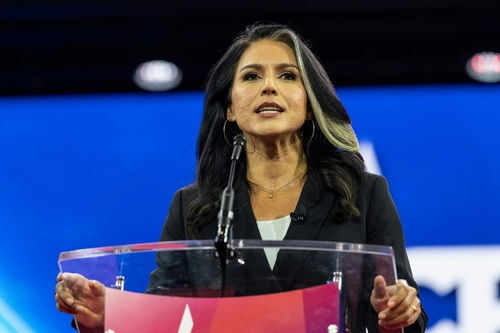
Tulsi Gabbard has resigned as Director of National Intelligence, stepping down to care for her husband as he battles a rare form of bone cancer — but Washington insiders suggest the full story may be more complicated.
Story Snapshot
- Gabbard submitted her resignation letter citing her husband’s rare bone cancer diagnosis as her primary reason for leaving.
- Her resignation is effective June 30, 2026, and President Trump confirmed the departure with a heartfelt message on Truth Social.
- Reports surfaced that Trump had privately asked advisors about replacing Gabbard weeks before the announcement, raising questions about the timing.
- Political tensions inside the intelligence community — including disputes over Iran policy and staffing decisions — had already put Gabbard under pressure before the resignation.
A Difficult Personal Decision
Tulsi Gabbard announced her resignation as Director of National Intelligence (DNI), effective June 30, 2026, citing her need to be present for her husband as he undergoes treatment for a rare form of bone cancer. According to a senior White House official and a senior Trump administration official, Gabbard’s decision was driven by her desire to support him through this serious health battle. President Trump confirmed the resignation and shared a heartfelt message on Truth Social praising her service.
In her resignation letter to the President, Gabbard stated she must step away to be by her husband’s side. The letter was described as personal and sincere in tone. For a decorated combat veteran and public servant who has dedicated years to national security, leaving a cabinet-level post is no small decision — and the stated reason reflects a deeply human priority that most Americans, regardless of politics, can understand and respect.
Political Pressures Were Already Building
Reports indicate Trump had privately asked advisors about replacing Gabbard before her resignation became public. According to sourcing cited by multiple outlets, Trump had expressed frustration with Gabbard over her handling of internal personnel matters — specifically her defense of a former deputy who had disagreed with the administration’s rationale for military action against Iran. Those tensions had reportedly been simmering for weeks prior to the announcement.
Tablet Magazine reported that Gabbard had also been accused by U.S. officials of sidelining pro-Israel voices within the intelligence community and staffing the DNI office with aides seen as resistant to Trump’s Iran policy. These allegations, sourced anonymously, paint a picture of a DNI whose internal management style had created friction with the broader administration agenda — friction that likely factored into the timing and circumstances of her exit.
The Iran Policy Fault Line
One of the most significant flashpoints involved Joe Kent, who served under Gabbard and resigned as director of the National Counterterrorism Center. Republican Representative Elise Stefanik of New York questioned Gabbard directly about Kent’s departure and whether it was connected to protecting the administration’s Iran war rationale. The episode exposed a rift between the DNI’s office and the White House over how intelligence was being shaped and communicated around the Iran conflict.
Breaking: DNI Tulsi Gabbard has announced her resignation, effective June 30, 2026. In a heartfelt letter to the President, she cites the need to support her husband, Abraham, following his recent diagnosis with a rare form of bone cancer. pic.twitter.com/brjaDtZyTJ
— Abhinav singh (@its_abhinav19) May 22, 2026
Gabbard had also made waves earlier by publicly exposing what she described as a congressional conspiracy used to impeach President Trump, releasing findings tied to the Intelligence Community Inspector General. That move earned her praise from Trump loyalists but may have also deepened institutional resistance within Washington’s permanent bureaucratic class — the very “deep state” apparatus she was appointed to reform.
Family First — But Washington Rarely Lets It Be That Simple
The competing narratives here — personal sacrifice versus political pressure — are not necessarily mutually exclusive. Washington cabinet departures rarely have a single clean cause, and anonymous sourcing dominates early news cycles before the full record emerges. What is confirmed: Gabbard submitted her resignation, her husband is seriously ill, and the administration accepted her departure. Whether political tensions accelerated the timeline is a question that may not be fully answered without on-record statements from those involved.
For conservative Americans who backed Gabbard’s appointment as a reform-minded outsider willing to challenge the intelligence establishment, her departure is a genuine loss. She brought a combat veteran’s credibility and a willingness to expose entrenched bureaucratic abuses that most Washington insiders would have left untouched. Whatever the full circumstances of her exit, her husband’s health crisis is real — and wishing their family well costs nothing.
Sources:
[1] YouTube – DNI Director Tulsi Gabbard is resigning, citing husband’s health
[2] Web – Kamlager-Dove Leads Members of the CBC in Calling for DNI Tulsi …
[3] Web – Trump privately asked advisors about replacing DNI Tulsi Gabbard
[4] Web – Director of National Intelligence – ODNI
[5] YouTube – Gabbard asked about Joe Kent’s resignation to protect Iran war
[6] Web – Tell Congress to demand Director of National Intelligence Tulsi …
[7] YouTube – ‘About to resign!’: Tulsi Gabbard next to quit after Joe Kent over …
[8] Web – Trump privately asked advisors about replacing DNI Tulsi Gabbard
[9] Web – DNI Tulsi Gabbard Exposes Conspiracy Used By Congress To …
[10] Web – Is Tulsi Gabbard the Next One Out? – Tablet Magazine