

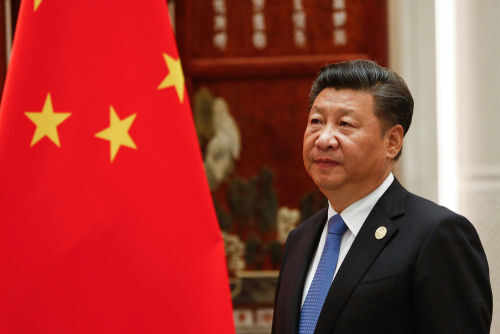
Xi Jinping’s tightening grip on China’s ruling party has built a loyalty-first elite system that should worry every American who cares about freedom and the future of global power.
Story Snapshot
- Xi has turned China’s ruling party into a **Leninist selectocracy**, where loyalty beats merit for promotion.
- Key positions across China are picked through a party machine that answers to Xi personally, not to laws or voters.
- This centralized power structure weakens checks and balances and makes conflict with the United States more risky.
- China’s growing dictatorship highlights why America must defend the Constitution, strong leadership, and national security.
Xi’s Leninist Selectocracy: What It Means
General Secretary Xi Jinping has taken China’s old cadre appointment system and turned it into a **Leninist selectocracy** built around personal loyalty to him. Researchers describe how Xi’s rule replaces collective leadership with strongman power and equates his own supremacy with the supremacy of the Chinese Communist Party. Under this model, the party, not the state, sits at the top, and Xi sits at the top of the party. That means the real decisions in China now flow through one man and his inner circle, not through any open or accountable process.
Scholars and official watchers explain that Xi’s team has tightened the personnel system that decides who runs provinces, major cities, state companies, universities, and the military. Promotion rules are vague by design, and party secretaries get the final say at each level. When standards are fuzzy and paths are not clear, it is easier to reward insiders and punish critics. Evidence from provincial appointments shows Xi’s camp often favors personal connections over performance when choosing party bosses and governors. That is classic “rule by loyalists,” not rule of law.
How Xi Centralized Power Around Himself
Since taking power, Xi has stacked the top leadership with allies and removed many older checks. Analysts note that he chairs a growing number of central leading groups and commissions that now steer major policy areas. These party bodies let him bypass China’s State Council, the government cabinet, and keep control inside the party apparatus. One study calls this a “strong state led by a political strongman,” where the party absorbs government offices and weakens any technocratic counterweight. This setup gives Xi fast control over security, the economy, and propaganda, but it also leaves little room for debate or correction.
Xi’s power reach goes beyond institutions into ideas and media. Research shows he launched a wide purge of dissenting and Western-leaning voices and pushed strict Marxist indoctrination across schools, media, and culture. Another study of ideological change under Xi describes a clear shift to the left, with renewed party control over courts, religion, ethnic minorities, and the arts. Xi’s personal ideology now sits in China’s Party Constitution as guiding doctrine. That level of control over both personnel and thought is what makes his system Leninist: a disciplined vanguard party around one “core” leader who claims to embody the nation.
Loyalty Over Merit: Risks at Home and Abroad
Evidence from China’s own observers and Western analysts shows that loyalty to Xi has become a litmus test in promotions and anti-corruption drives. In practice, this clientelist system rewards those who praise Xi, follow campaign orders, and join his faction. When leaders are chosen for obedience, not skill, the quality of decision-making drops. A major study warns that replacing elite checks and balances with personalist rule increases the risk of miscalculated war. If generals and provincial chiefs fear Xi more than they fear failure, honest advice can vanish at the very moment when calm judgment is most needed.
Supporters inside China claim these changes make the system more “modern” and effective. But the same research finds the gains are short-term. Concentrating power, ending predictable succession, and hollowing out rules may boost regime control today, yet they weaken long-term stability. Other scholars describe how Xi’s dominant faction offers its clients better promotion chances than any rival group, ending the older balance among factions. That means future leadership fights, economic shocks, or foreign crises will play out in a brittle system where everything depends on one man’s health, judgment, and inner circle. History shows that kind of setup rarely ends well.
Why American Conservatives Should Pay Attention
This growing party dictatorship matters for Americans who care about constitutional government, free speech, and secure borders. Xi’s Leninist selectocracy stands as the opposite of our system: no real elections, no independent courts, no open press, and no genuine local control. Analysts at major U.S. institutions admit the Chinese Communist Party is unwilling to allow real separation of powers or Western-style checks. Instead, China doubles down on one-party rule while expanding social and economic control. That model is now tied closely to Xi himself, who has removed term limits and built a path to rule for life.
For the United States, this means we face a nuclear-armed, high-tech rival whose decisions rest with a single strongman and his loyalists, not with a broad leadership bound by law. As Xi tightens control over media, education, and culture, he also pushes narratives that challenge American values and seek to weaken our alliances. His system reminds us why defending our Constitution, keeping government power limited, and resisting any “elite selectocracy” at home are vital. When we see how far China has moved toward late-Stalin-style concentration of authority, it underscores the need for strong, clear-eyed leadership in Washington that puts American sovereignty, energy independence, and national security first.
Sources:
realcleardefense.com, libertarianinstitute.org, jamestown.org, english.www.gov.cn, csis.org, mfa.gov.cn, bbc.com, teneo.com, api.pageplace.de, publications.parliament.uk