
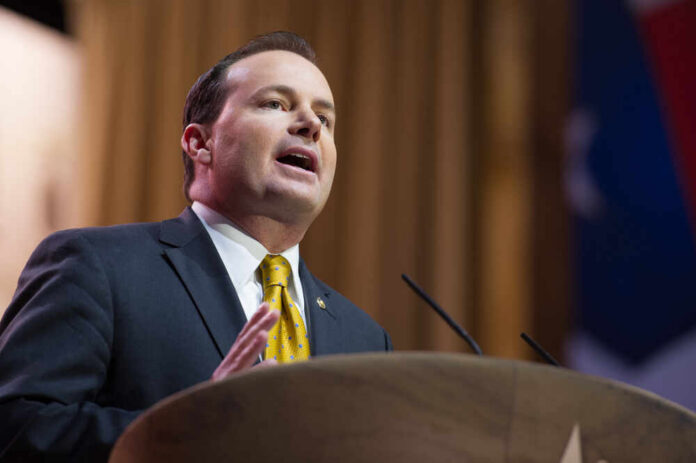
Senator Mike Lee is warning that if the Senate does not pass the SAVE America Act by August 8, millions of patriotic voters could watch their voices canceled by non‑citizen voting and weak-kneed Republicans.
Story Snapshot
- The SAVE America Act would require proof of citizenship to register and photo ID to vote in federal elections.
- The bill already passed the House and has twice reached 50 votes in the Senate but keeps hitting leadership roadblocks.
- Supporters say the Act protects “American citizens — and only American citizens” deciding U.S. elections.
- Democrats and some Republicans label it “voter suppression,” while 14 states already use similar proof-of-citizenship rules.
What The SAVE America Act Would Actually Do
The SAVE America Act is President Trump’s top election bill and Senator Mike Lee’s core proposal to tighten federal voting rules. The bill requires proof of United States citizenship when a person registers to vote and a photo identification when they cast a ballot in federal elections. Acceptable documents include a United States passport, a birth certificate, and certain state or tribal identification cards that show citizenship. The White House sums up the goal simply: American citizens, and only American citizens, should decide American elections.
Senator Lee repeats one clear idea on the Senate floor: the Act is meant to make it easy to vote and hard to cheat. Federal law already says only United States citizens can vote in federal races. The SAVE America Act tries to give that rule teeth by tying voter registration to clear proof of citizenship and tying voting to a firm photo ID requirement. Supporters argue this enforces the long‑standing promise of “one citizen, one vote” and prevents non‑citizens from diluting honest votes.
Why August 8 Matters And How The Bill Is Stalled
The House of Representatives passed the SAVE America Act in February 2026, after the House Rules Committee advanced it on a recorded vote and the full chamber approved H.R. 7296 by a simple majority. In the Senate, Senator Lee forced a “voterama” test vote on June 4, 2026, and secured 50 votes in favor and 49 against. All Democrats voted no, while Senator Susan Collins switched to yes, proving a basic majority exists when leadership allows a clean vote.
Despite that simple majority, the bill has hit what Lee calls procedural “brick walls.” The Senate parliamentarian ruled that the SAVE America Act cannot be passed through budget reconciliation because it is mostly policy and does not change taxes or federal spending. That closes the path to a simple majority fix and leaves the bill facing the 60‑vote filibuster hurdle. Three Republicans—Lisa Murkowski, Mitch McConnell, and Tom Tillis—have voted no on key SAVE Act votes, keeping the bill well short of cloture. This is why Lee is warning colleagues that failing to act before August 8 would be politically “suicidal.”
Supporters Say Americans Back It; Critics Call It Suppression
Senator Lee and other conservatives say the SAVE America Act reflects the common sense view of most Americans. Lee cites polling showing roughly 70 to 80 percent support for requiring proof of citizenship to vote, including strong backing across party lines. Fourteen states already have laws on the books that require proof of citizenship to register, often using passports or original birth certificates. These state laws give a real‑world example for Trump’s national plan and show that stricter documentation rules can be written and applied across different states.
Civil rights groups, liberal senators, and many media outlets attack the bill as an extreme voter suppression move. Senator Mark Warner and Senator Tim Kaine call the SAVE America Act the worst voter disenfranchisement effort in decades and say it could block millions from voting. The National Urban League brands it a throwback to Jim Crow‑style tactics. Legal advocacy groups claim the Act would force people who register online, by mail, or at motor vehicle offices to show papers in person, cut popular registration methods, and add new criminal penalties for poll workers who make mistakes.
Key Fears: Roll Purges And Paperwork Burdens
Many critics focus on how the SAVE America Act would handle voter rolls and back‑end data checks. Some explainers say the bill would make states send unredacted voter lists to federal agencies and use the Systematic Alien Verification for Entitlements database and Social Security records to flag possible non‑citizens. They warn that this system is error‑prone and could tag real citizens as risks, leading to voter roll purges that happen as often as every 30 days. Because the National Voter Registration Act does have a 90‑day quiet period against canceling registrations close to elections, opponents argue the SAVE framework would gut those protections.
WATCH: Mike Lee Warns Senate Must Pass SAVE America Act by August 8, or We Won't Have It for Midterms https://t.co/JOAJtMSQLK #gatewaypundit via @gatewaypundit
— NoraNH 🇺🇸 (@NoraNH2) July 12, 2026
Supporters answer that the bill does not trap citizens who lack papers. Senator Lee notes that if someone truly cannot find any document—maybe records were lost or destroyed—they can sign a sworn affidavit stating they are a citizen. Under his description, once that affidavit is signed, the burden shifts to the state to verify the claim using its own records, and the voter does not need to spend money or chase more paperwork. That safeguard is meant to keep the focus on catching real non‑citizen registrations, not messing with lawful voters who face record problems.
The Larger Battle Over Election Rules And What Comes Next
The fight around the SAVE America Act fits a long pattern in American politics. Since the Voting Rights Act of 1965 and the more recent weakening of federal oversight after the Supreme Court’s Shelby County decision, states and Congress have gone back and forth over voter identification and proof‑of‑citizenship rules. Today, most states already ask for some form of identification at the polls, but only a smaller group demands actual documents that prove citizenship when registering. The SAVE America Act would push that stricter model nationwide for federal elections, with Trump’s team framing it as a basic defense against non‑citizen voting.
Right now, there is little primary data in the public debate that proves large‑scale non‑citizen voting or shows exactly how many eligible voters lack passports or original birth certificates. Analyses of documentary proof‑of‑citizenship laws estimate that about 12 percent of registered voters do not have the most common documents on hand, which could mean millions need extra steps to stay registered. On the other hand, it remains illegal for non‑citizens to vote already, and supporters insist that laws without strong proof rules are easy to exploit. With midterms coming and August 8 looming, Senator Lee is pressing his own party to decide whether they stand with stronger election integrity or with the same old excuses.
Sources:
thegatewaypundit.com, usatoday.com, foxnews.com, americanprogress.org, democracydocket.com, facebook.com, rules.house.gov, whitehouse.gov, vote.org, kaine.senate.gov, issueone.org, bipartisanpolicy.org, lawyerscommittee.org, ncsl.org, ballotpedia.org, mapresearch.org