

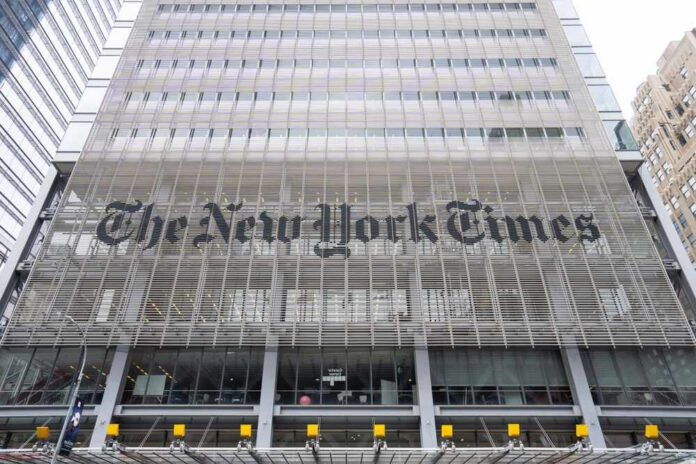
The New York Times has ignited an international firestorm by spotlighting rape allegations in Israeli detention facilities—claims so explosive that even a former Israeli prime minister says his words were used to imply evidence he never endorsed.
Story Snapshot
- A May 12, 2026 NYT opinion column by Nicholas Kristof alleges widespread sexual abuse of Palestinian detainees by Israeli soldiers, interrogators, settlers, and prison guards.
- Israel’s Foreign Ministry condemned the column as a “blood libel,” while the NYT publicly defended its fact-checking and said it has no retraction plans.
- Former Israeli Prime Minister Ehud Olmert disputed how he was quoted, arguing the column implied validation of extreme claims he did not make.
- Human-rights reporting and surveys cited in coverage describe patterns of abuse claims, but publicly available information still relies heavily on testimonies rather than disclosed case adjudications.
What Kristof Alleged—and Why the Claims Hit a Nerve
Nicholas Kristof’s May 12 column described what he called a pattern of sexual violence against Palestinian detainees, including accounts of rape, gang rape, sexual humiliation, beatings, threats against family members, and the use of dogs in assaults. The column framed the allegations as part of a broader atmosphere of impunity after Hamas’s Oct. 7, 2023 atrocities and the ensuing war. The NYT said Kristof traveled and gathered testimonies corroborated by multiple types of sources.
The piece became instantly polarizing because it touched two raw realities at once: the documented brutality of Hamas on Oct. 7, including sexual violence, and longstanding allegations from advocacy groups that Israeli detention practices can cross into abuse. With American readers already skeptical of legacy media after years of selective framing, the controversy wasn’t just about the allegations—it was about whether the paper applied consistent standards of evidence and context to a story guaranteed to inflame tensions.
Israel’s “Blood Libel” Charge vs. the NYT’s No-Retraction Stance
Israel’s Foreign Ministry responded by labeling the column the “worst blood libel,” a phrase that signals more than ordinary disagreement and places the dispute in historic accusations used to demonize Jews. Israeli officials also argued the column’s timing was politically motivated, alleging it was published to overshadow an Israeli report about Hamas sexual violence. The New York Times countered that it was unaware of any planned timing and said it later covered Israel’s report after it was released.
On May 13, the NYT issued multiple defenses, saying the opinion piece was fact-checked and corroborated, and rejecting talk of a retraction. That matters because opinion pages typically allow sharper moral arguments, but the moment an op-ed leans on allegations of war crimes, readers expect newsroom-level proof. The published reporting summarized in available sources does not indicate that the NYT has released underlying documentation, leaving the public to weigh institutional assurances against the intensity of the accusations.
The Olmert Dispute Highlights the Risk of Narrative-Driven Quoting
Ehud Olmert became a focal point after he said the column misrepresented him. According to subsequent reporting, Olmert argued he did not validate claims involving children or the specific allegations about dogs and rape, even though the column positioned his quote in a way critics say suggested high-level confirmation. That distinction is crucial: when a prominent figure’s words appear to bolster extraordinary claims, it can sway readers who might otherwise demand more direct evidence.
The Olmert dispute also underscores why skeptics—especially Americans tired of “trust us” journalism—react sharply when elite outlets ask for deference instead of receipts. None of the summarized coverage shows a public release of case files, convictions, or a transparent methodology beyond citing interviews and third-party reports. When narratives are built on testimonies and advocacy research, accuracy depends heavily on careful wording, full context, and clear separation between what is alleged, what is corroborated, and what is proven.
What the Human-Rights Reporting Adds—and What Still Isn’t Publicly Settled
Coverage around the column referenced surveys and reports from organizations such as Save the Children, along with UN-related testimony and human-rights investigations, describing allegations of sexual violence and mistreatment in detention. Context reporting also pointed to expanded detentions after Oct. 7 and to facilities criticized for overcrowding and limited due process, including administrative detention. These points can add plausibility to claims of systemic problems, but plausibility is not the same as legal proof of specific crimes.
Based on the research provided, the public record in this dispute still leans on patterns, testimony, and organizational findings rather than a transparent list of adjudicated cases tied to the most severe accusations. That gap helps explain why the story has become a political and cultural flashpoint instead of a straightforward human-rights investigation. In the U.S., where citizens are already wary of institutions that demand compliance without clarity, the lesson is simple: allegations this serious require maximum transparency.
https://twitter.com/davidshuster/status/1656320702375890944
For conservatives watching media institutions up close in 2026, the immediate question isn’t whether abuse should be investigated—it should. The question is whether America’s most powerful newsroom is applying consistent evidentiary standards, presenting full context about Oct. 7, and distinguishing proven facts from claims amplified through ideological lenses. With protests planned and no retraction announced, the NYT appears prepared to stand by its presentation, and critics appear prepared to keep pressing for accountability.
Sources:
Israel condemns NYT article on sexual abuse of Palestinians in Israeli prisons
NYT columnist alleges widespread sexual abuse of Palestinians in Israeli detention system
NYT pushes back on Israeli criticism of column alleging rape of Palestinian inmates