
A terror strike on Riyadh’s main airport killed three people and disrupted flights, underscoring the growing threat from Yemen’s Houthi militants to civilian travel and global commerce.
Story Highlights
- Saudi aviation officials reported three deaths after strikes hit Riyadh’s King Khalid International Airport.
- Houthi forces claimed responsibility and said missiles targeted airports in Riyadh and Najran.
- Airlines canceled flights as smoke and damage were reported at the airport, including to a Saudia plane.
- The attacks followed other Houthi-claimed strikes on Saudi airports earlier in the week.
Saudi Aviation Authority Confirms Deadly Airport Strikes
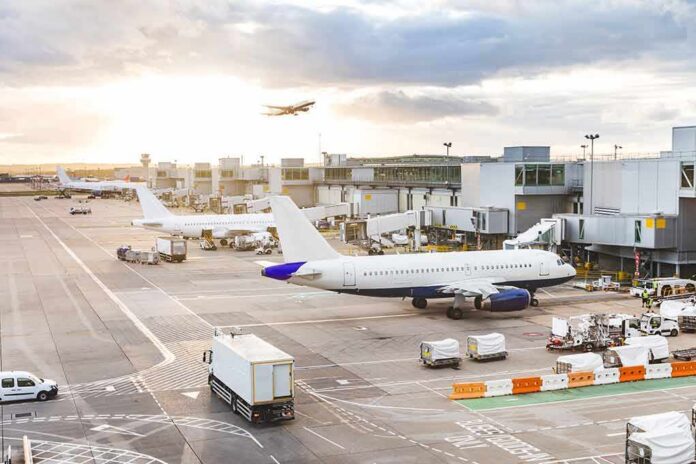
Saudi Arabia’s General Authority of Civil Aviation said strikes hit facilities at King Khalid International Airport in Riyadh, killing three Saudi citizens and injuring others of several nationalities. The authority also reported that a second strike hit a Saudia Airlines aircraft on the ground. Officials described emergency response, safety checks, and efforts to restore operations. They did not publicly name the perpetrators at the time of the announcement, while emphasizing passenger safety and continuity of service.
Associated Press and other outlets detailed the sequence at the airport. Witnesses reported explosions, evacuation orders, and smoke. The airport resumed limited service after inspections, but disruptions rippled across schedules. The General Authority of Civil Aviation confirmed casualties and damage, including to a Saudia aircraft at the gate. That level of disruption at a critical hub highlighted how militants can threaten everyday travel, business, and medical flights if they target civilian aviation nodes.
Houthis Claim Responsibility And Vow More Airport Disruptions
Yemen’s Houthi movement publicly claimed responsibility for the Riyadh attack. The group’s spokesman said the Houthis fired ballistic and cruise missiles at Riyadh and Najran airports, and that flights were disrupted as intended. The statement framed the strikes as part of a wider campaign, linking them to recent actions across Saudi territory. News reports emphasized that the Houthi claim came alongside on-the-ground accounts of explosions and evacuations at King Khalid International Airport in Riyadh.
Reuters reported that the strikes sent smoke over the airport, damaged a Saudia Airlines plane, and prompted airlines to cancel flights to the Saudi capital. Flight tracking showed service returned gradually as authorities cleared hazards and inspected runways and terminals. The timing raised concerns for global business and energy markets, as Riyadh was preparing to host high-profile meetings. Disruption at a major Gulf gateway carries wider knock-on effects for trade and travelers across continents.
Pattern Of Airport Targeting Escalates Regional Risk
BBC and CNN placed the Riyadh incident in a series of airport attacks across several days. Reports described earlier strikes on Riyadh and Abha airports, with casualties and injuries recorded at both sites. Saudi civil aviation statements cataloged the damage and tolls while focusing on safety measures. The clustering of attacks showed a clear intent to hit civilian infrastructure, raise fear, and force costly shutdowns that affect families, workers, and international visitors moving through the kingdom.
BREAKING: Saudi Civil Aviation authorities report 12 people have been killed and 309 injured following Houthi attack on King Khalid International Airport in Riyadh.
Among those killed were 4 Saudi citizens and residents of several nationalities, including two Bangladeshis, as… pic.twitter.com/tdVCM501MS
— DOAM (@doamuslims) October 11, 2026
The conservative takeaway is simple: terrorists who fire missiles at airports are attacking basic freedom of movement. They target families in terminals and crews on the ramp, not soldiers on a battlefield. Strong borders, reliable missile defense, and decisive action against terror networks are necessary to protect travelers and prevent wider economic shocks. When airports shut down, supply chains slow, prices can rise, and our citizens and allies face greater risk. That is why these attacks demand a firm response grounded in clear facts and allied coordination.
Sources:
feedpress.me, apnews.com, reuters.com