
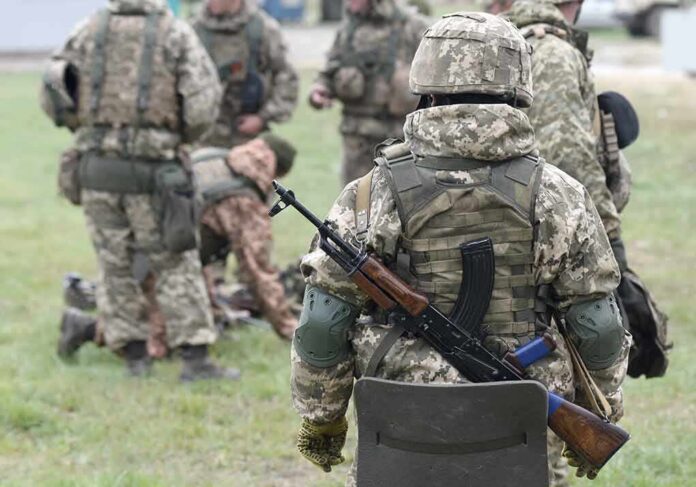
Vice President J.D. Vance says it is time to end Washington’s open-ended Ukraine funding and push for a negotiated peace that puts Americans first.
Story Highlights
- Vance rejects “never-ending” U.S.-funded war in Ukraine and urges a settlement path.
- Vance voted against a $61 billion Ukraine aid bill and argues Europe must carry more load.
- Vance says talks must include Ukraine and Europe and proceed from strength.
- Vance keeps sanctions and other pressure tools on the table if talks stall.
Vance Sets a Clear End State: Negotiations Over Endless Funding
Vice President J.D. Vance has laid out a direct goal: end an open-ended stream of U.S. money into the Ukraine war and move to a negotiated settlement. In a May 2024 speech, he said America should not keep funding a “never-ending war” and that the United States had “done more than our fair share”. That stance aligns with a core promise of President Trump’s second term: focus U.S. power on results, not inertia or blank checks.
Vance’s voting record backs his words. In April 2024, he voted against a foreign-aid package that included nearly $61 billion for Ukraine. He has argued that Washington has overstated Russia’s broader threat and that U.S. interests require a tighter, results-driven approach. Supporters read this as common sense after years of high prices and stretched budgets at home, while asking Europe to finally step up.
Munich Message: Peace Through Strength, With Europe and Ukraine at the Table
At the February 2025 Munich Security Conference, Vance said the administration believes a “reasonable settlement between Russia and Ukraine” is achievable if parties negotiate from a position of strength. He stressed that both Europeans and Ukrainians must take an active role in any talks to make peace stable and lasting. This message tells allies the United States will help lead, but not carry, the entire load anymore.
Vance’s remarks also fit a wider pattern seen in long wars. As conflicts drag on, goals blur, costs rise, and pressure grows to turn battlefield uncertainty into talks. The key question becomes whether more aid raises leverage or whether defined limits, paired with European responsibility, produce better bargaining terms. Vance’s answer favors limits, clear goals, and shared burden across the Atlantic, consistent with a peace-first push.
Keeping Leverage: Sanctions and Other Pressure if Moscow Stalls
Vance has left room for coercive tools if Russia refuses good-faith talks. Reporting on his position noted that economic measures, including sanctions, remain available, and that military options were not categorically removed from the toolbox. That approach aims to keep pressure on Moscow while still offering a diplomatic off-ramp. The administration’s message is simple: pursue peace hard, but keep leverage real.
There are limits in the public record. The available materials do not spell out a full operational plan with territorial terms, security guarantees, verification, or timelines. But Vance’s standard remains firm: push for a settlement that locks in stability and forces Europe and Ukraine to drive key decisions. That reflects a conservative view of limited government abroad, fiscal care at home, and strong borders and families over far-off, open-ended wars.
What It Means for Conservatives: Security, Borders, and American Priorities
For many readers, this policy hits long-ignored basics. Americans want secure borders, affordable energy, and a government that spends wisely. Vance ties the Ukraine war to spikes in fuel costs and inflation pain felt by working families, arguing that blank checks overseas crowd out needs at home. Ending open-ended aid and moving to serious talks follows a peace-through-strength model that defends U.S. interests without writing infinite checks to foreign capitals.
The burden-sharing push also matters. Nearby European states face the most direct risk and should lead with resources and resolve. Research on support patterns shows that proximity often drives sustained aid, which supports Vance’s call for Europe to carry more weight as talks advance. If Europe steps up, and if Washington keeps smart leverage, a durable settlement becomes more likely than an endless, expensive stalemate.
Next Steps: Define Strength, Set Benchmarks, Demand Results
The administration can tighten this strategy by setting clear public benchmarks for “negotiating from strength,” such as European commitments, energy resilience, and sanctions triggers. Congress can back it with oversight that tracks costs and outcomes. This approach serves core conservative aims: sober spending, strong deterrence, and peace without surrender. Vance has planted the flag: finish the job through talks, not through another year of blank checks and shifting goals.
If the parties move to the table, verification and enforcement will be vital to avoid a paper peace. External guarantees, monitors, and real penalties often help ceasefires hold, which future talks must address. For now, the headline is clear. The White House is pressing a settlement path that protects American taxpayers, keeps leverage over Moscow, and puts Europe where it belongs: at the front line of its own security.
Sources:
transcripts.cnn.com, abcnews.com, securityconference.org, ro.usembassy.gov