
A sitting United States senator is urging the government to “regulate the internet” so fewer Americans will support President Trump.
Story Highlights
- Sen. Chris Murphy tied internet regulation to stopping support for “demagogues” like President Trump.
- Murphy links online life to loneliness and political vulnerability, citing his past Senate remarks.
- Civil liberties groups warn government control over platform curation collides with the First Amendment.
- Research on social media and loneliness is mixed, weakening broad policy claims.
Murphy Connects Internet Rules To Curbing Support For Trump
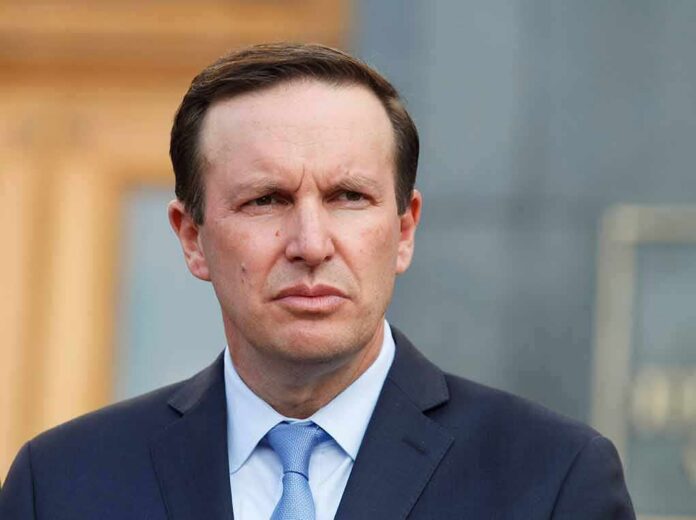
Senator Chris Murphy, a Democrat from Connecticut, said regulating the internet would help prevent lonely people from falling for a “demagogue like Donald Trump,” drawing a direct line between online life, vulnerability, and voting behavior. He framed oversight as part of a broader push to address social isolation. His comments echo years of speeches and releases where he blamed social media habits for driving disconnection, especially among young people, and urged limits on how platforms amplify content.
Murphy’s claim centers on a simple theory: when people spend more time online and feel isolated, they seek the loudest voices. He argues rules on algorithms and platform design can blunt that pull and make the public less prone to emotional appeals. He has also pushed regulation in adjacent tech areas, which shows a sustained view that government should steer digital systems more tightly to protect users and the public square.
Free Speech Groups Warn Of First Amendment Conflicts
The American Civil Liberties Union said the Supreme Court has signaled that government attempts to control how social media platforms curate feeds run into the First Amendment. The Court’s guidance in recent social media cases underscored strict limits on state power to dictate ranking or recommendation systems, even when lawmakers say they want to protect users from harm. That principle collides with proposals to police algorithms because curation is itself a form of protected editorial judgment.
Other civil liberties advocates argue that efforts to curb so-called harmful content often morph into viewpoint bias and chill speech. They warn that any rule aimed at political “demagoguery” invites a government referee on which opinions may spread online. Analysts also note the internet is still changing fast. They caution Congress against broad controls that could lock in today’s assumptions while hurting future speech and innovation.
The Evidence On Loneliness And Social Media Is Mixed
Murphy grounds his call in a loneliness crisis. Some studies do link higher time on multiple platforms to more loneliness and depression, which fits his concern. But other peer-reviewed work finds no clear tie between social media use itself and loneliness once you control for other factors, or shows effects that are small, mixed, or platform-specific. That uneven record should temper sweeping claims that regulation of feeds will reliably fix isolation at scale.
Several cohort and review studies report that overall time online may raise loneliness, while typical social media use does not show a consistent effect. Some work even finds different results by age group or platform type. Policymakers thus face a tradeoff: targeting algorithms could restrict speech and product choice while the promised mental health gains are uncertain. A narrower, evidence-led approach may be more prudent than broad rules on content ranking.
What Regulation Could Mean For Everyday Users
Any federal rule that directs how platforms rank, recommend, or remove political content risks turning Washington into the editor of the nation’s feed. That would burden core political speech and debates that voters need in an election year. It could also empower future administrations to throttle viewpoints they dislike. For conservatives, that is a flashing red light on government overreach and a direct threat to open discussion of faith, family, guns, borders, and spending priorities.
Sen. Chris Murphy, D-Conn., is calling for greater regulation of the internet and social media, arguing changes are needed to address misinformation and political polarization. pic.twitter.com/dh9Sz3azeJ
— John .F. Kennedy Q 🌎 (@JFK_Q_PRD) September 22, 2026
A better path would target real harms without policing opinions. Encourage transparency reports on recommendation systems. Enforce existing laws against crime and fraud online. Support parents, schools, churches, and civic groups that rebuild real community. Let adults choose which platforms and tools they use. Protect free speech first, as the Constitution demands, and resist calls to “fix” politics by regulating which voices Americans are allowed to hear.
Sources:
foxnews.com, murphy.senate.gov, politico.com, alec.org, cigionline.org