
President Trump’s targeted ban on CNN, MS NOW, and Politico ignited a fresh press-freedom fight while exposing years of media bias disputes.
Story Snapshot
- Trump named CNN, MS NOW, and Politico for “fake news,” not all media.
- Reporters said there was no immediate enforcement after the announcement.
- CNN claimed any ban would be an unconstitutional assault on press freedom.
- The clash fits a long pattern of fights over White House press access.
Trump’s Stated Rationale Focused on Bias and Accuracy Concerns
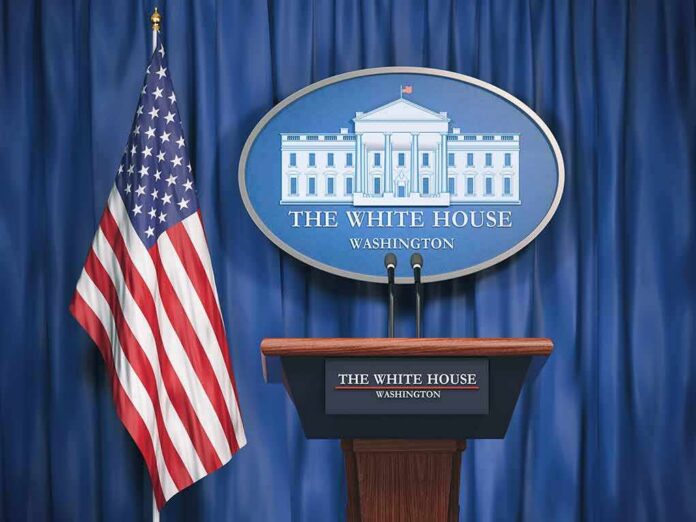
President Trump announced a ban on three outlets he said push “fake news” and “purposely negative stories,” naming CNN, MS NOW, and Politico. Reports said the action was selective, aimed at those outlets rather than a full press freeze. Trump’s framing linked the outlets’ coverage to harm against Republicans and his administration. The public reports captured his charge of bias but did not include formal exhibits that proved specific stories were false or corrected by the outlets.
Major outlets documented Trump’s words and the scope. Reuters, Axios, and others said the order singled out the three organizations. That detail matters. It shows targeting by outlet, not a shutdown of the entire press corps. Trump’s move fits years of friction with legacy media that many conservatives view as hostile. It also places a spotlight on the line between managing access and punishing viewpoint, a line courts have argued over for decades.
Immediate Fallout: Dispute Over Enforcement and Constitutional Claims
CNN answered fast. The network said it stood by its White House team and had a right under the United States Constitution to report without interference. Coverage noted that, after the announcement, reporters saw no immediate steps to enforce the ban. That gap created heat on both sides. Critics called the move retaliation. Supporters said the media’s outrage ignored a record of slanted coverage against conservatives and the Trump administration.
USA Today and the British Broadcasting Corporation highlighted CNN’s statement that any ban would be an “illegal assault” on a “fundamental and constitutionally protected right.” First Amendment groups quoted in press coverage echoed that claim. Those comments raised the stakes by shifting the argument from editorial fairness to constitutional law. The legal test will likely turn on where and how access is controlled within the White House complex.
What the Law and Precedent Say About White House Access
Courts have treated the press room and general facilities differently from tighter spaces such as the Oval Office or Air Force One. Once the White House opens general facilities to credentialed media, due process and clear standards matter. Access limits tied to space, security, or rules can pass. Punishment tied to viewpoint is riskier. Recent reporting pointed to this exact tug-of-war, noting past clashes between the Trump administration and outlets over credentials and restricted areas.
𝐉𝐎𝐇𝐍 𝐒𝐎𝐋𝐎𝐌𝐎𝐍: 𝐖𝐇𝐂𝐀 𝐍𝐄𝐕𝐄𝐑 𝐃𝐄𝐅𝐄𝐍𝐃𝐄𝐃 𝐌𝐄 𝐖𝐇𝐄𝐍 𝐁𝐈𝐃𝐄𝐍 𝐂𝐀𝐋𝐋𝐄𝐃 𝐌𝐘 𝐀𝐂𝐂𝐔𝐑𝐀𝐓𝐄 𝐑𝐄𝐏𝐎𝐑𝐓𝐈𝐍𝐆 𝐅𝐀𝐊𝐄 𝐍𝐄𝐖𝐒
The press corps is still furious about Trump banning 𝐂𝐍𝐍, 𝐌𝐒 𝐍𝐎𝐖, 𝐚𝐧𝐝 𝐏𝐨𝐥𝐢𝐭𝐢𝐜𝐨 from the White House… pic.twitter.com/zaLk8jshRw
— M.A. Rothman (@MichaelARothman) September 19, 2026
That context helps readers sort claims from noise. If the administration formalizes standards and applies them evenly, it can argue it is managing access, not punishing speech. If the record shows outlet-based retaliation for content, courts could push back. For now, public reporting shows Trump’s stated motive, named outlets, and no clear enforcement steps after day one. The next facts that matter are written criteria, credential actions, and any actual denials at the gate.
Sources:
aljazeera.com, cnn.com, usatoday.com, bbc.com