

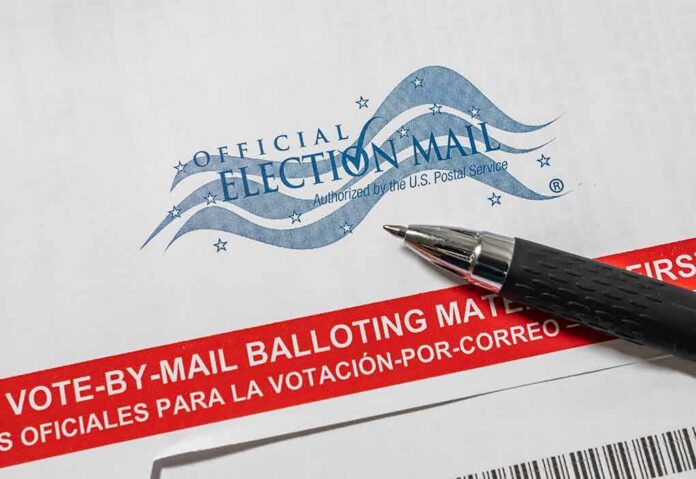
The Supreme Court refused key parts of a federal mail-ballot rule for now, keeping election control with states while leaving President Trump’s integrity push alive but delayed.
Story Highlights
- The Court blocked Postal Service limits tied to Trump’s order ahead of midterms, without deciding legality.
- Lower courts said parts of the order likely overstep presidential power and could disenfranchise voters.
- The administration says tighter mail-ballot rules are needed to secure elections nationwide.
- States say last-minute envelope and barcode changes are not feasible this close to voting.
What The Supreme Court Did — And Did Not Do
On a fast-track request, the Supreme Court said the Postal Service cannot enforce major pieces of a new mail-ballot rule before the midterm vote. The order did not settle whether the policy is lawful. It keeps the status quo for now, with local officials sending, receiving, and counting ballots as they have in past cycles. The Court’s brief order stressed that this pause does not answer the merits of Trump’s executive order or the Postal Service regulation.
The administration wanted a nationwide green light to start changes now. The Justice Department argued that agencies needed time to prepare systems before ballots surge in October and early November. The request framed the rule as a narrow set of mail-handling steps to prevent error and abuse in vote-by-mail. Reuters reported the filing asked the Court to put lower-court blocks on hold so election security work could proceed across all states before the midterms.
Why Lower Courts Hit Pause On Parts Of The Plan
A federal judge in Boston found the Postal Service rule likely unlawful and said enforcing it would risk widespread voter problems. The judge concluded the rule likely strays beyond executive power and intrudes on how states run elections. A related appeals ruling highlighted concerns that the approach could disrupt mail voting and burden local offices. The injunction called the proposed enforcement “likely unconstitutional and unlawful,” warning disenfranchisement was “practically inevitable” if rushed into effect.
These rulings mean agencies cannot enforce key demands, like new ballot-envelope features, while the fight continues. The Court’s emergency orders in recent weeks have been procedural, not final merits decisions, so the legal questions remain open. That leaves a split picture: the integrity goals stand, but the most forceful national mail changes are on hold. For now, states keep day-to-day control over eligibility checks and ballot processing timelines, pending full review.
Election Offices Say Timing, Not Just Policy, Drives The Clash
State and local officials from both parties warned they lack time, money, and staff to redesign envelopes, add new barcodes, and retool systems weeks before voting. Some ballots were already moving to printers or in the mail when courts heard arguments. Officials said last-minute changes could confuse voters, jam mail workflows, and strain election staff. They called the mandate “not feasible” so close to November, even apart from the legal fight over federal authority.
Conservatives want cleaner lists, stronger verification, and real penalties for fraud. The administration’s case says common standards across the mail stream will help protect honest votes in every zip code. But courts are weighing how far federal agencies can go without Congress and how to avoid chaos near an election. That means integrity upgrades must be built to fit clear law, tested early, and deployed with enough time to train workers and inform voters — not in the final sprint.
What It Means For Voters And For Election Integrity
For everyday voters, little changes right now. You can request, receive, and return mail ballots as before. Local officials still check eligibility under state law. The Court’s pause avoids sudden rules that could snag lawful voters. For integrity hawks, the path is slower but not closed. The Court left open the question of whether some federal mail-handling standards could pass legal muster later, after full briefing and with a cleaner record away from the election rush.
The bigger fight is about who sets the rules and when. The administration says national mail standards are part of running a secure federal function: the mail stream. Opponents say that steps like list-matching and envelope barcodes wander into election regulation, which belongs to states and Congress. Until the Court decides the merits, the wise course is steady, transparent fixes made well before ballots go out — upgrades that protect every legal vote without springing surprises weeks before Election Day.
Sources:
theatlantic.com, npr.org, scotusblog.com, aclu.org, constitutioncenter.org