

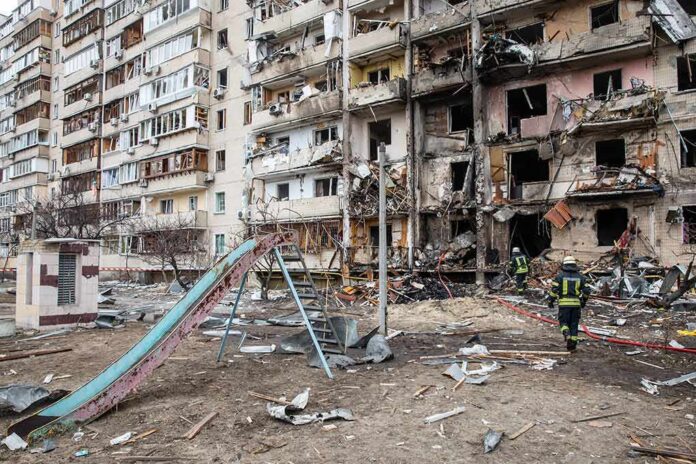
A Russian glide-bomb barrage smashed Zaporizhzhia homes, killing civilians and shattering a family as a survivor watched her sister die.
Story Highlights
- Officials say guided bombs hit two apartment buildings, killing two and injuring 42, including eight children.
- Regional reports describe repeated strikes on residential areas across several July dates, with more injuries and damage.
- Russia claims it targets defense facilities and logistics, but local accounts point to homes and civilian sites.
- United Nations monitors report rising civilian casualties in Ukraine, with glide bombs a growing cause.
Residential Towers Hit, Dozens Hurt, Children Among Victims
Ukrainian regional authorities reported that Russian forces launched glide bombs at Zaporizhzhia on July 19, 2026, striking a five-story and a nine-story apartment building. The blast killed two people and injured 42, including eight children, and destroyed two floors in one building. Emergency crews pulled residents from shattered stairwells and smoke-filled flats. Windows blew out across nearby blocks. Families who were preparing dinner or putting kids to bed suddenly faced flying glass and fire.
Witnesses described chaos as alarms rang and lights failed. Parents carried children through dust and debris. Neighbors used phones as flashlights to guide the injured down broken hallways. Rescue workers moved door to door, checking for survivors. The scene underscored the simple fact: these were homes, not military positions. The strike left families homeless in minutes and turned a normal evening into a fight to live. Local officials said most victims were ordinary residents.
Pattern of Guided Bomb Strikes Across the City
The July 19 attack did not stand alone. Local reports detail a series of guided aerial bomb and drone strikes across several July dates, often hitting residential neighborhoods. On July 13, four strikes wounded seven people, including a four-year-old girl, and destroyed a private house. On July 23, five guided bombs injured at least 18 to 25 people, including a child and several infants, across three city locations. On July 10, strikes killed one and injured at least 29, damaging civilian infrastructure.
Further accounts put the July toll in context. On July 3, guided bombs hit a residential area at night, injuring eight and damaging a two-story building, according to the regional administration. On July 22, two people died and at least six were injured in attacks on the city and a nearby village. A July 23 incident also set an apartment block ablaze and injured several residents. Together, these reports map a steady pattern: guided munitions landing where families live and work, far from any clear frontline.
Moscow’s Justification Meets On-the-Ground Reality
Russia’s Ministry of Defence has said its strikes target defense industry facilities and transport and logistics centers in Zaporizhzhia, not civilians. That claim clashes with on-the-ground reporting that documents bombed apartments, homes, and a shopping center, along with injured children and parents running for cover. Officials and rescue crews in Zaporizhzhia cite housing blocks, local enterprises, and other civilian sites as impact points, with casualty counts and building damage to match. The facts presented by local authorities show widespread civilian harm.
United Nations monitors report a sharp rise in civilian casualties in Ukraine in 2026, with aerial bombs and glide bombs becoming a major driver of harm in cities. The monitors verified that at least 274 civilians were killed and 1,763 injured in May alone, a four-year high, and noted the growing role of glide bombs in urban deaths and injuries. The Zaporizhzhia incidents fit that wider trend. When wide-area explosive weapons hit populated areas, civilians pay the price.
Why This Matters to American Readers
American taxpayers and leaders want clear facts and moral clarity. The Zaporizhzhia strikes show the human cost when powerful munitions fall on homes. A survivor who lost her sister stands for many families who did nothing but live in their own apartments. Basic principles demand accountability for attacks that destroy civilian life. Strong support for civil defense, aid corridors, and credible war-crimes documentation aligns with American values of protecting the innocent and resisting lawless force.
What Comes Next
Local officials will keep tracking casualties and damage as rescue work continues. Investigators will review fragments and impact patterns to build cases. International groups will verify numbers where they can, though active strikes slow access. Readers should expect more updates as July’s strike pattern is analyzed in full. For now, the established facts are stark: guided bombs hit Zaporizhzhia homes, civilians died and were wounded, and families like one survivor’s lost a loved one forever.
Sources:
united24media.com, yahoo.com, kyivindependent.com, censor.net, kyivpost.com