
Jurors saw graphic photos and key video that prosecutors say expose a staged “suicide” in the death of pregnant 23-year-old Sandra Birchmore.
Story Highlights
- Prosecutors say 40,000 messages document a years-long relationship starting when Birchmore was a minor.
- Witnesses say surveillance video shows ex-Stoughton officer Matthew Farwell at her building the day she died.
- A federal indictment ties the alleged killing to silencing a witness and adds a count for the unborn child.
- An FBI examiner concluded the findings support strangulation; the medical examiner now lists cause as undetermined.
Prosecutors Show Digital Trail and Building Video
Trial coverage reports prosecutors recovered about 40,000 messages between Sandra Birchmore and Matthew Farwell, reflecting a relationship they say began when she was 15 and he was 27. Stoughton detective Heather Cheever testified she recognized Farwell in apartment surveillance video from the day of Birchmore’s death, and said he wore a mask in that footage. Building employees said they reviewed lobby footage, flagged an unknown figure, and turned the recordings over to police after her death.
Prosecutors argued the mask matters because Farwell often spoke against masking during the pandemic, suggesting concealment of identity, not health concerns. The defense countered that he masked and wore a hood to hide an affair from his wife, not to hide a crime. This clash sets up a central jury question: whether the visit was a breakup or part of a plan to silence Birchmore before she could speak to authorities about the relationship.
Medical Findings and Scene Evidence Under Scrutiny
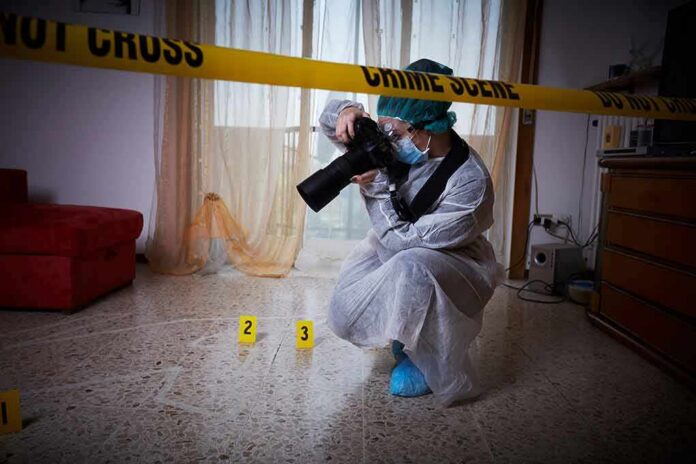
The medical examiner first ruled the death a suicide. That opinion was later withdrawn, and the cause now reads undetermined. An examiner affiliated with the Federal Bureau of Investigation (FBI), Dr. William Smock, reviewed the autopsy and concluded Birchmore was strangled, a finding prosecutors rely on at trial. Jurors also saw detailed photos of the scene, while a Canton officer described conducting the welfare check and finding Birchmore deceased in her apartment.
The defense says the original suicide ruling was more reliable than a later review, and points to claimed signs of distress, such as a reported online search about a suicide ribbon, to bolster that theory. Defense counsel also told jurors that Farwell’s DNA was not found under Birchmore’s fingernails and that DNA on a ligature was a mixed sample that could not be pinned on him. Those points aim to raise doubt about a hands-on killing by Farwell.
Federal Charges Focus on Witness-Silencing Intent
The United States Attorney’s Office filed a superseding indictment in 2025. It charges witness tampering by killing tied to preventing a communication to law enforcement and adds a count addressing the death of Birchmore’s unborn child. That federal theory requires proof of intent to stop communication with law enforcement, not only proof of an unlawful relationship or a suspicious death. The distinction narrows what jurors must decide under federal law.
Prosecutors say messages and journals show choking role-play, control demands, and patterns that fit coercion, which they argue supply motive and intent. The defense replies that Birchmore threatened to reveal the relationship to Farwell’s wife, suggesting his fear was exposure at home, not exposure to federal agents. That framing, if believed, could undercut the specific intent needed for the federal charge.
Why This Case Resonates With Conservative Readers
This case tests trust in institutions that should protect youth. Prosecutors say a police youth program contact became a secret sexual relationship that started when Birchmore was underage, then ended in death. If proven, that would be a deep betrayal of duty and community trust. Conservatives value accountability, the rule of law, and protecting children. A careful, fact-driven trial is the path to justice and to restoring faith in those sworn to serve.
An image of Sandra Birchmore from the day police found her dead in her Canton apartment accidentally appeared on a large court monitor during Matthew Farwell’s federal murder trial. https://t.co/TICFwZ0kKL
— Boston Herald (@bostonherald) October 13, 2026
The court will weigh hard evidence, not headlines. The jury must decide what the messages, video, and forensic findings actually show—and whether they prove both a killing and a witness-silencing intent beyond a reasonable doubt. The photos are graphic and the claims are emotional, but the verdict will hinge on authenticated records, expert testimony, and whether the federal elements are met under the law.
Sources:
nypost.com, cnn.com, wcvb.com, bostonglobe.com, boston.com, justice.gov