
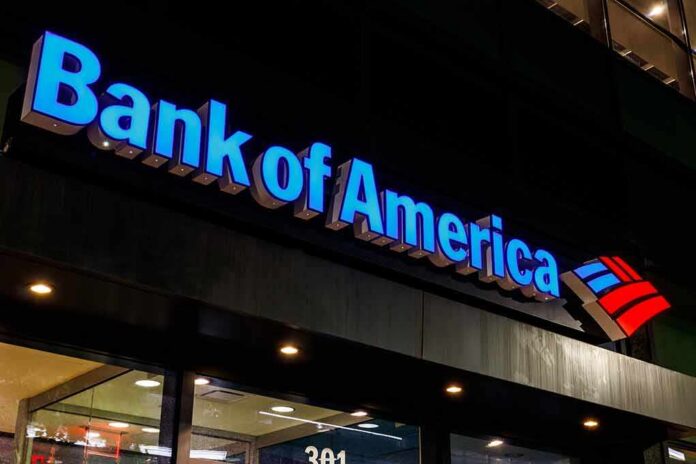
U.S. Treasury fined Bank of America a record $1.2 billion after the bank failed to report over $5 billion in suspicious transactions, including activity tied to Chinese money-laundering networks.
Story Highlights
- Treasury cited more than $5 billion in unreported suspicious activity and issued a $1.2 billion penalty.
- Regulators said over $1 billion involved national security risks, including Chinese laundering indicators.
- A separate banking regulator imposed a $750 million penalty for related compliance failures.
- Media reported the bank admitted willful Bank Secrecy Act violations in the settlement.
Treasury Details Record Penalties And Unreported Transactions
The U.S. Department of the Treasury announced that Bank of America failed to timely report more than $5 billion in suspicious transactions to the Financial Crimes Enforcement Network. Treasury issued a $1.2 billion penalty. Officials also said over $1 billion of that activity involved priority illicit finance risks that touch national security. That set includes transactions that Treasury described as indicative of Chinese money-laundering networks and schemes near the southwest border.
Treasury’s action did not stand alone. The Office of the Comptroller of the Currency, which supervises national banks, issued a separate $750 million civil penalty. Reports noted that figure ranks among that regulator’s largest. The combined moves show multiple federal authorities found serious deficiencies in the bank’s anti-money-laundering controls and reporting. The agencies focused on failures to file suspicious activity reports and to manage high-risk transactions across a vast payments footprint.
Admission Of Willful Violations And Scope Of The Breakdown
Contemporaneous reporting said the bank admitted willful violations of the Bank Secrecy Act in the settlement. Outlets reported the bank acknowledged failures to keep a compliant anti-money-laundering program, to conduct required due diligence on foreign correspondent accounts, and to file suspicious activity reports when needed. Those admissions underscore that the case is not a paperwork error. It reflects core program gaps that can hide criminal cash flows if left unchecked.
Coverage also stressed the scale of the institution at the time of the lapses. One report said Bank of America processed more than $9 trillion in transactions during the relevant period, amplifying the stakes of any monitoring failure. When a large bank misses red flags, vast sums can move without timely alerts to law enforcement. That risk explains why the penalties are so high and why the government pressed for clear accountability.
National Security Risks And Why It Matters To Families
Treasury said more than $1 billion in the missed reports touched priority threats. That included indicators of Chinese money-laundering networks and possible trade-based schemes linked to the southwest border. These risks are not abstract. Transnational crime can fuel fentanyl trafficking, intellectual property theft, and sanctions evasion. When a major bank does not sound the alarm, criminals gain time to move cash, buy shell goods, and mask true owners. That harms American workers, families, and local communities.
Bank of America has been hit with $1.21 billion in federal penalties after failing to timely report more than $5 billion in suspicious transactions.
More than $1 billion involved potential national security risks, including activity linked to Chinese money-laundering networks… pic.twitter.com/SJu0Y5SOLr
— Cost of America (@CostOfAmerica) October 14, 2026
This case also fits a broader trend toward tougher anti-money-laundering enforcement. In recent years, agencies have shifted from warnings to large financial penalties and formal admissions. Analysts have found that since 2012, most enforcement actions include money penalties, and headline cases have grown in size. That context helps explain why the government pursued parallel actions and stressed deterrence in a sector where missed alerts can quickly scale into national risks.
What Comes Next For Compliance And Accountability
Bank of America’s own public policy pledges to reject financial crime, cooperate with authorities, and end high-risk relationships when needed. The reported admissions and penalties show a gap between policy and practice during the period at issue. The orders push the bank to close that gap. Stronger monitoring, better due diligence on foreign correspondent accounts, and faster suspicious report filing should be expected outcomes, along with board-level oversight to keep fixes on track.
For readers, the takeaway is clear. Financial crime hurts Main Street by raising costs, feeding cartels, and letting adversaries exploit our system. When regulators enforce the law, they defend honest businesses and families. President Trump’s administration set a clear line with this case: even the largest banks must follow the rules, report suspicious activity on time, and protect America’s security and markets. Continued oversight will show if the promised reforms deliver lasting results.
Sources:
nbcnews.com, home.treasury.gov, cnbc.com, finance.yahoo.com, easternherald.com