
Trump’s blunt line about Black and Jewish voters who back Abdul El-Sayed lit a fuse that now tests where political hard talk ends and identity shots begin.
Story Snapshot
- Trump said Black and Jewish El-Sayed voters are “not smart” and “crazy.”
- Remarks came at back-to-back rallies, forming a clear, repeated message.
- El-Sayed answered that Trump targets his name and faith, not his policies.
- El-Sayed’s platform centers on Medicare for All and cutting foreign military aid.
What Trump Said And Where He Said It
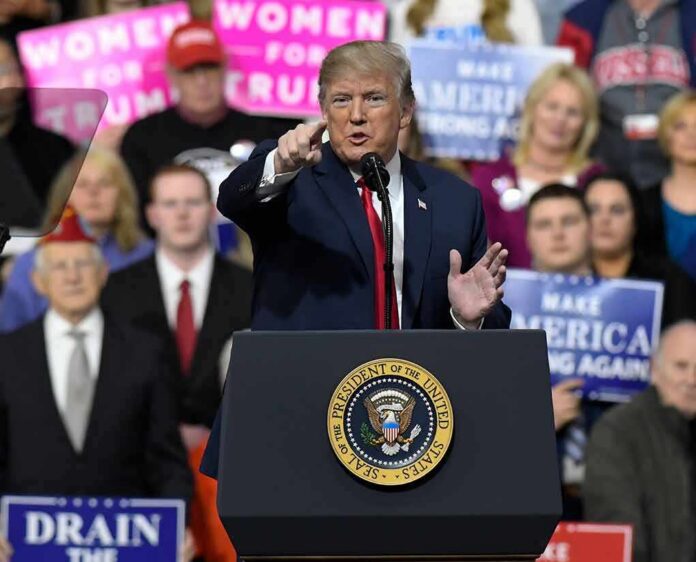
Trump told a Daytona Beach crowd that if you are Black or Jewish and vote for Abdul El-Sayed, “you’re not smart.” Mediaite reported the quote as delivered at the rally, with the attack aimed at those two groups of voters. At a South Carolina stop just before Florida, Trump used “you’re crazy” to make the same point about Black and Jewish voters who would back El-Sayed. The New York Times carried video of that line, placing it squarely on the public record.
These were not stray riffs. They formed a back-to-back set of remarks that linked El-Sayed support to poor judgment among two communities Trump has tried to court and to warn. Coverage also noted Trump’s claims that El-Sayed is tied to the Muslim Brotherhood or is a “jihadist,” but those claims did not come with documentation in the cited remarks. Without public proof, that charge remains an allegation, not a settled fact to weigh.
El-Sayed’s Reply And His Framing
El-Sayed answered that Trump attacks his name and faith rather than his plans. He told supporters he loves and reveres the Jewish people, while he opposes spending U.S. taxpayer money on foreign military aid. He said dollars should go to education, health care, and infrastructure at home. He also leaned into Trump’s name-calling, joking he will be “Senator Muhammad” to Trump, which showed he prefers to defang the jab rather than dwell on it.
That reply built a moral frame and a policy frame. It tried to shield Jewish voters from being cast as a monolith and separated them from a lobbying group debate. It also claimed a kitchen-table agenda that fits Michigan’s pocketbook mood. For voters who dislike identity shots, that is a clean lane. For voters who want a tough stance on foreign threats, his cut-aid line will raise questions they will want answered in detail.
The Policy Stakes Behind The Rhetoric
El-Sayed’s record shows a progressive slate: Medicare for All, ending gerrymandering, taxing billionaire wealth, banning corporate political money, and changing Senate rules like the filibuster. Reporting also ties him to the “uncommitted” push and to resistance against heavy spending by pro-Israel groups. Supporters see bold reform and fewer corporate strings. Skeptics see large costs, fewer checks and balances, and a foreign-policy shift that could unsettle key alliances.
From a conservative common-sense lens, the case against this agenda turns on price tags, trade-offs, and security risk. Medicare for All would move millions into a single government plan; that invites tax hikes and rationed care if the math misses. Ending the filibuster lets bare majorities swing rules and rights. Cutting foreign military aid can look neat on paper, but it may raise the bill later if crises spread and U.S. troops face bigger fights.
How The Lines Land With Voters
Research on negative campaigning shows it grabs attention but can backfire on the attacker. Voters punish crude hits more than sharp contrasts. Trump’s “not smart” and “crazy” labels drew coverage fast, yet that same coverage called them bigoted or identity-based. That frames the story around tone, which helps El-Sayed change the subject to respect and bread-and-butter issues. The politics reward force, but the market punishes overreach.
There is also a trust test. If Trump wants to tie El-Sayed to extremism, he will need public proof that can stand in the light. If El-Sayed wants to sell Medicare for All and big structural changes, he must show how Michigan hospitals, small businesses, and seniors come out ahead without surprise bills or waits. Voters can handle hard truths when numbers hold. They tune out when leaders trade facts for labels.
What Matters Next For Michigan
Michigan voters do not need lectures on identity. They need clear math and straight talk. If Trump centers the case on costs, safety, and schools, he opens a debate he can win on details and prudence. If he leans on group insults, he gives away the high ground. If El-Sayed details funding, timing, and guardrails—and shows where he will say no to his own side—he gains credibility beyond his base.
The close here is simple. Elections are hiring decisions. Hire the plan that strengthens families, protects the country, and respects the voter. Strip out the insults, follow the numbers, and demand receipts—from both men.
Sources:
mediaite.com, yahoo.com, huffpost.com, nytimes.com, michigandaily.com, cnn.com, apnews.com, cambridge.org