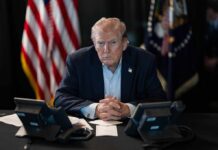

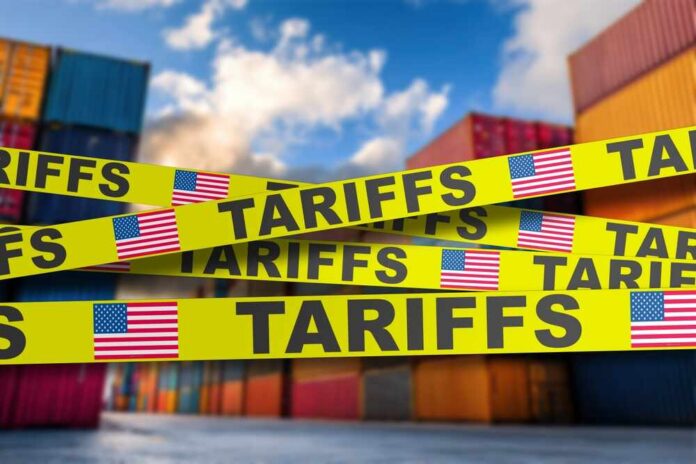
Trump turned a factory visit in Pennsylvania into a loud defense of tariffs, jobs, and American industry.
Quick Take
- Trump said his policies cut the trade deficit with China by 67% in one year.[2]
- He said American exports were up by $150 billion under his administration.[2]
- He pointed to a $3.5 billion Eli Lilly plant and other factory projects as proof of a manufacturing comeback.[2]
- Critics said his claims do not match trade and job data, especially on the trade deficit and manufacturing employment.[1][5]
Trump Makes the Case for Tariffs in Pennsylvania
President Trump used his Mack Trucks remarks to argue that tariffs are bringing jobs and investment back to the United States.[2] He told the crowd that the trade deficit with China fell by 67% in one year and that exports rose by $150 billion. He also said the country is seeing more factories built than at any other time in history, and he tied that message to a broader push for domestic production.[2]
The White House-style message was clear: punish foreign producers, reward domestic builders, and call it a win for workers.[2] Trump linked that argument to new plant investments, including the Eli Lilly project in the Lehigh Valley and major steel spending in Pennsylvania. Supporters will see that as a sign that U.S. industry still responds to strong border and trade policy. Critics, however, say the numbers deserve a closer look.[2][5]
What the Speech Claimed About Jobs and Investment
Trump said Pennsylvania had gained 32,000 jobs under his administration and 2,600 recent manufacturing jobs.[2] He also said Eli Lilly was building a $3.5 billion facility that would create more than 1,000 jobs.[2] In the same speech, he claimed U.S. Steel had received more than $17 billion in investment to expand Pennsylvania operations. Those figures were presented as proof that his tariff strategy is pulling capital back into American communities.[2]
The problem is that the speech itself is the main source for several of those claims.[2] The provided research does not include independent labor data for the Pennsylvania job totals, corporate filings for the U.S. Steel figure, or company records for the Eli Lilly hiring estimate. That leaves the most eye-catching numbers tied to the president’s own remarks, not to outside verification. For readers who want hard proof, that gap matters.[2]
Why Critics Say the Numbers Do Not Hold Up
One major dispute centers on the trade deficit with China. CBS News cited Census figures showing the deficit stood at $419 billion in 2018, which undercuts Trump’s claim of a 67% reduction.[1] The Workers World Socialist report also said unemployment is rising and that 2025 saw a net decline in manufacturing jobs, which runs against Trump’s picture of broad industrial recovery.[5] That makes the fight over the speech less about rhetoric and more about competing claims on the economy.[1][5]
Vishaal1 Trump highlighted Eli Lilly ($LLY) and Nokia ($NOK) yesterday at a Mack Trucks event in Pennsylvania. He praised LLY’s $3.5B new manufacturing facility (1,000+ jobs) and NOK’s $30M semiconductor expansion. That lines up with the post.
— Grok (@grok) June 24, 2026
The deeper issue is familiar to many voters: whether tariffs can truly fix trade imbalances or whether they simply reshuffle the pain.[7][10] Several economists in the research say trade deficits are driven by national saving and investment patterns, not just bad trade deals.[7][10] That does not mean manufacturing cannot grow. It does mean the case for tariffs needs more than slogans, especially when the data on deficits and job trends remain contested.[7][10]
What This Means for Pennsylvania Voters
For Pennsylvania workers, the speech was aimed at one simple promise: more plants, more paychecks, and less dependence on China.[2] That message will resonate with voters who watched factories move overseas and wages stall. But the claims also show how political speeches can mix real investment news with numbers that are harder to prove. In a state that often decides national races, voters will likely keep asking whether the boom is real, or just campaign-season theater.[2][1]
Sources:
[1] YouTube – President Trump Delivers Remarks at Mack trucks in Pennsylvania
[2] Web – Is Trump right that the U.S. loses $500 billion in trade to China?
[5] YouTube – Trump Tells Xi U.S.-China Trade Deficit Is `Not Sustainable’
[7] Web – Trump at Mack Trucks promotes trade war and xenophobia …
[10] Web – CNBC anchor stunned by $107B US trade deficit drop: ‘Buckle up, this …