

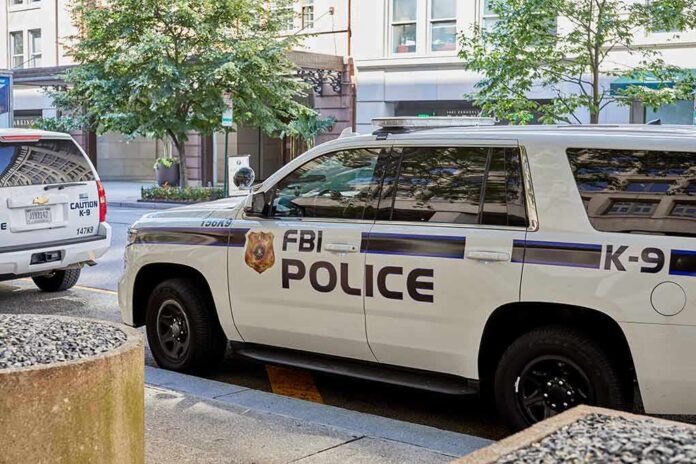
The Federal Bureau of Investigation says it has captured all 10 of its Ten Most Wanted fugitives and delivered record crime drops in 2025, marking a rare win for law and order under President Trump.
Story Highlights
- The murder rate fell an estimated 18.1% in 2025, tying the lowest on record.
- Violent crime dropped an estimated 9.3% year over year, the largest on record.
- The FBI reports capturing all 10 fugitives on its Ten Most Wanted list.
- The White House credits stronger enforcement partnerships for the gains.
FBI Data Show Historic Crime Declines in 2025
The Federal Bureau of Investigation reported that the 2025 murder rate was 4.1 per 100,000 people, tying the lowest rate ever recorded, and that murders fell an estimated 18.1% from 2024. The Bureau also released preliminary figures showing an estimated 9.3% drop in violent crime, the largest one-year decline on record. These data points reflect nationwide reporting through the Uniform Crime Reporting Program and its current incident-based system.
The White House highlighted the same headline declines, pointing to the steep drop in murders and the largest recorded decline in violent crime. Officials tied the results to stronger federal, state, and local enforcement efforts aimed at violent offenders and drug networks. The message from the administration stressed that when leaders back the blue and target real criminals, communities get safer and families gain peace of mind.
Ten Most Wanted Roundup Underscores Fugitive Focus
FBI Director Kash Patel told senators that agents have captured all 10 fugitives on the Bureau’s Ten Most Wanted list. That result capped a run of arrests that included high-profile cases and fast turnarounds in difficult investigations. The Most Wanted program has long relied on nationwide tips, coordination with local police, and aggressive field work. Patel credited agents and partners for the finish, framing it as proof of a back-to-basics focus on public safety.
Justice Department updates also noted rapid captures in separate Ten Most Wanted cases, showing how decisive coordination can shorten manhunts. When agents, task forces, and foreign partners move quickly, dangerous suspects lose places to hide. That approach lines up with the Bureau’s claim that hard, targeted policing pays off. The public expects this urgency against killers, traffickers, and cartel-linked enforcers, and recent results match that demand.
How the Numbers Are Built—and Why They Still Matter
The Federal Bureau of Investigation’s Uniform Crime Reporting Program depends on agency submissions and standard estimation for agencies that do not report a full year of data. The method has been public for years and allows national estimates to reflect missing months while keeping measures consistent. While any national estimate has limits, these procedures are known and applied the same way each year, which lets readers weigh trends with reasonable confidence.
Media coverage echoed the Bureau’s headline figures, noting that violent crime fell and the murder rate reached a multi-decade low. Independent summaries aligned with the scale of the reported declines, which helps support the basic trend line. The broad agreement among official releases and major outlets signals that the core facts are not in dispute, even as debates continue about which policies deserve the most credit for the shift.
Why This Matters for Families, Policing, and Policy
Safer streets mean kids can play outside, small shops can stay open, and families can thrive. Conservative readers have asked for common-sense policing that targets violent offenders, gangs, and traffickers. The latest Federal Bureau of Investigation and White House numbers show progress in that exact lane. Leaders should keep pushing the strategies that work: strong partnerships, clear priorities, and zero tolerance for predators who harm children and communities.
The numbers don’t lie.
→ 31,000 gangbangers GONE
→ 2,700 criminal gangs disrupted or dismantled
→ 54,000 violent crime arrests
→ Homicides down 18%+
→ Robberies down 19%
→ Aggravated assaults down 7%+
→ 3,200+ KG of fentanyl seized—enough to kill 247 MILLION Americans
→… pic.twitter.com/oNqSrTULmo— Todays World News (@TodaysWorldNews) September 16, 2026
Lawmakers should also keep watch on data quality, funding, and mission focus. Congress can demand clear metrics while backing the tools that help agents catch violent criminals faster. That includes better information sharing, cross-border cooperation, and support for local task forces. When Washington puts safety first and politics last, the results look like 2025’s record declines and a clean sweep of the Ten Most Wanted list.
Sources:
facebook.com, wabcradio.com, fbi.gov, foxnews.com, washingtontimes.com, archive.org