
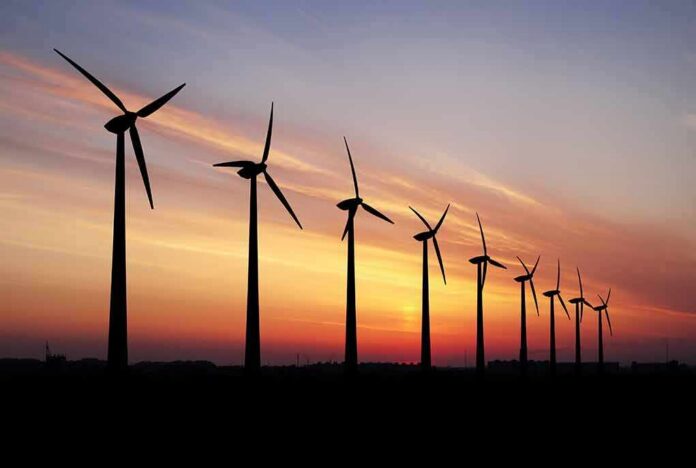
President Trump doubled down on his war against wind farms, calling them ugly, costly, and harmful—while noting one “redeeming” feature: they can be taken down when they fail communities and the grid.
Story Highlights
- Trump reaffirmed his stance that wind projects waste money, scar landscapes, and kill wildlife.
- The administration paused federal wind leasing and permitting to review costs, subsidies, and impacts.
- A federal court later struck down a broad permitting freeze as unlawful, shaping next steps.
- Energy agencies and advocacy groups still tout wind’s job and cost claims, which face scrutiny.
Trump’s Case Against Wind: Cost, Beauty, Reliability, Wildlife
President Trump has argued for years that large wind turbines harm property values, ruin views, and kill birds. He repeated that view in recent remarks, saying wind is a fast way to lose money, beauty, and fields, and that Europe is hurting itself with wind buildouts. Earlier statements also flagged noise and wildlife deaths as core problems. His critique ties to a broader push for dependable energy, lower costs, and respect for local communities that live with the projects, not just the slogans.
Supporters say wind brings jobs and cleaner air. The Department of Energy highlights benefits and possible low-cost power from land-based wind. But those gains depend on subsidies, siting, and grid conditions that vary by region, which is exactly what the administration says must be reviewed with clear numbers and transparent tradeoffs. The debate turns on who bears the burdens on the ground versus who reaps distant, diffuse benefits on the grid and in corporate balance sheets.
Federal Actions: Pause, Review, and the Fight Over Subsidies
On day one, the administration paused new leasing and many approvals for wind projects on federal lands and waters, ordering a full review of leasing and permitting practices. The January 2025 memorandum temporarily withdrew all areas on the Outer Continental Shelf from new offshore wind leasing to allow that review. The White House later moved to end market-distorting subsidies for what it calls unreliable, foreign-controlled green energy, including wind.
The review targets big questions that matter to families and small businesses. How much do tax credits and mandates raise bills elsewhere on the grid? How do backup plants, new transmission lines, and curtailment costs change the real price of wind power? Who pays when projects underperform or stall? The administration says these are basic issues of fairness, transparency, and national strength, not talking points for global elites.
Court Pushback: What a Key Ruling Changed—and Didn’t
Litigation followed, and a federal court struck down a near-blanket wind authorization freeze as “arbitrary and capricious,” limiting how broad a pause can go without deeper record support and tailored steps. That ruling shapes the path forward but does not bar careful reviews or targeted oversight. Analysts note several courts have faulted sweeping suspensions even as they leave room for lawful, reasoned scrutiny of permits and leases.
The result is a reset, not a surrender. Agencies must document why and how a change happens, address important factors, and avoid blanket stops that lack analysis. The administration can still press hard on enforcement, conduct project-specific reviews, and tighten financial guardrails. That approach matches conservative goals: follow the law, protect ratepayers, and stop subsidies that hide true costs from families and small firms.
Competing Claims: Jobs, Prices, and Community Impacts
Energy agencies and advocacy outfits claim wind creates good jobs, lowers pollution, and can be cost-competitive. The Department of Energy points to potential low-cost land-based wind in some markets, plus community benefits. Those claims matter, but they do not erase local harms or the need to count backup and transmission costs that show up later on monthly bills. Policymakers must weigh system averages against real-world siting and reliability needs.
For conservatives, the bottom line is simple. Energy policy should respect property rights, keep power affordable, and protect wildlife and coastlines without pushing one-size-fits-all mandates. President Trump’s stance says wind’s “redeeming” feature is that communities are not stuck forever. If a project fails neighbors, grids, or wallets, it can and should be taken down—and the books should be opened so taxpayers and ratepayers finally see the true cost.
Sources:
npr.org, govinfo.gov, congress.gov, factcheck.org, whitehouse.gov, enel.com, arkenergy.com.au