

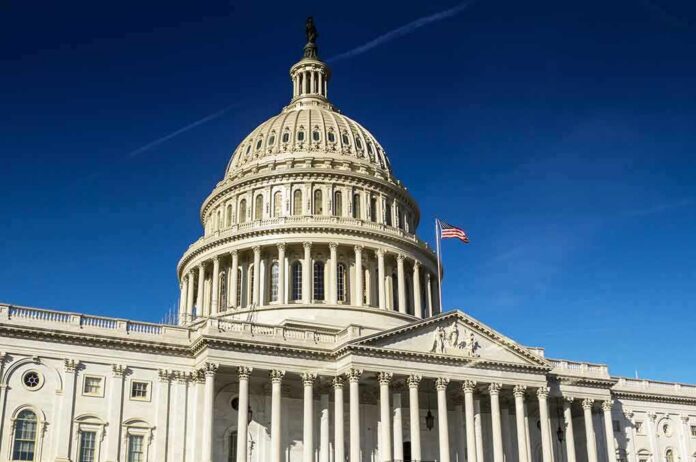
CBS News spotlights nine Senate and 42 House races that could decide control of Congress, sharpening the 2026 battleground under President Trump’s second-term agenda.
Story Highlights
- CBS flags nine Senate and 42 House races as likely majority deciders.
- Key Senate names include Dan Sullivan vs. Mary Peltola in Alaska and Susan Collins vs. Troy Jackson in Maine.
- All 435 House seats are on the ballot; 218 seats are needed to control the chamber.
- Independent reporting also sees about nine competitive Senate races and roughly 50 competitive House contests.
What CBS News Says Will Decide the Majority
CBS News identifies nine Senate races and 42 House races that it says are likely to decide who runs Congress after November. The network frames these contests as the core battlefield and notes the list can shift as campaigns develop. For conservatives tracking control of committees, judges, border bills, and spending, these races are the map to watch. The call lines up with other national reporting that narrows the true swing turf to a small slice of the full ballot.
For the House, CBS underscores that every one of the 435 seats is up, and that 218 seats make the majority. It also notes two current vacancies, which can tilt the margin before November but do not change the math for Election Day. That means tight races in a few dozen districts could set the House agenda on issues like border security, energy policy, and government spending that matter to families and small businesses.
Senate Contests: Names, States, and Stakes
In the Senate, CBS ties its watchlist to real, named matchups. In Alaska, Republican Senator Dan Sullivan faces former Democratic Representative Mary Peltola, a well-known figure from the House. In Maine, Republican Senator Susan Collins faces Democrat Troy Jackson after a summer candidate switch. These contests show the fight will run through diverse states where energy jobs, fishing rights, and national security shape the vote.
Reuters reporting tracks with this shape of the fight. It says Democrats need four seats to win the 100-seat Senate and that independent analysts see about nine competitive Senate races this cycle. That estimate supports the idea that a single-digit set of states will settle control, even though filings, debates, and late money can still move lines in the final weeks.
House Battlegrounds: A Tight Map Inside 435 Seats
CBS points to specific House districts as likely deciders, including a newly redrawn Southern California seat. That race features Republican Jim Desmond and Democrat Marni Von Wilpert vying to replace outgoing Republican Representative Darrell Issa. Newly drawn lines can pull even safe seats into play, which is why national groups are pouring funds and field staff into these targeted districts, not across the entire map.
Outside CBS, national outlets often place the competitive band near a few dozen House seats. Reuters notes that about 50 races could settle House control. That figure overlaps with CBS’s 42-number frame and reflects a hard truth for voters: most districts are set, and the fight for the majority will likely come down to a few suburban and industrial seats where turnout and pocketbook issues rule the day.
How to Read a Moving Target Without Getting Spun
Election maps shift as candidates enter, exit, or face late hits. CBS itself flags changes, like Troy Jackson stepping in as the Maine Democratic nominee this summer. The network also warns its list can change as the campaign rolls on. That caution matters. Conservatives should track the named Senate contests and the roughly four dozen House fights, but expect late polling, fundraising, and ground game to elevate or drop a few districts before ballots are cast.
Why These Races Matter for Conservative Priorities
Committee gavels decide hearings on border failures, crime, and federal overreach. Floor control sets energy policy and spending restraint. If Republicans grow or defend majorities in these target races, they can back President Trump’s push for lower energy costs, stronger borders, and less red tape. If they fall short in a handful of these contests, the other side can block judges, stall deregulation, and advance policies that conservatives see as a threat to family budgets and constitutional rights.