
A teen was killed and dozens were hurt when a suspected Hezbollah cluster submunition exploded during a school hike near Israel’s Lebanon border.
Story Highlights
- Police and medics reported one student killed and about 20 others injured in the blast.
- Israel Defense Forces said a likely Hezbollah cluster submunition caused the explosion.
- The group was an organized religious-school outing on a permitted hiking route.
- Officials are investigating how unexploded ordnance remained in a public area.
Confirmed Facts: A School Outing Turns Deadly
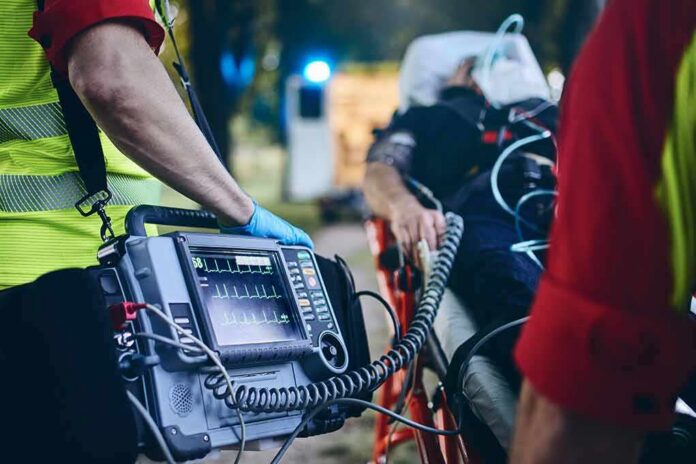
Israeli first responders reported one student dead and roughly two dozen wounded after an explosion struck a religious high school group hiking near the Lebanon border. Police said the initial suspicion was unexploded ordnance. Medics and reporters counted about 19 to 24 injured students and teachers, with some seriously hurt. Local officials identified the group as students and staff from a religious high school on an organized trip. The event happened in northern Israel along established hiking terrain.
The Israel Defense Forces issued a preliminary account pointing to a likely Hezbollah cluster submunition left in the area. Reporters described the object as a cluster bomblet consistent with munitions used in cross-border attacks. Police continued to secure the site and gather evidence after the blast. Authorities noted that casualty figures could shift as hospitals update conditions and as investigators sort medical and police reports from the scene.
Who Was Involved: Students, Teachers, and Local Responders
The hike included students and teachers from ORT Yeshiva High School, according to municipal and media reports. The Education Ministry said the route was open to the public, and the group had permission to be there. Emergency teams moved quickly, airlifting and transporting the injured to nearby hospitals. Photos and video from the scene showed security forces restricting access while bomb technicians assessed the area for any additional hazards that could endanger rescuers or bystanders.
Police and army units coordinated traffic control, medical evacuation, and site safety. Commanders worked to prevent more injuries, a common risk when an initial blast draws in crowds. Officials emphasized that the investigation’s early focus is to confirm the device type and origin. They also want to map the travel path of the group to check whether anyone handled or moved an object before it detonated. That timeline helps determine training, signage, and clearance needs.
Why It Happened: The Persistent Danger of Unexploded Ordnance
Explosive remnants from past and recent fighting can sit for months or years before a person disturbs them. Cluster submunitions are small, scatter across wide areas, and often fail to explode on impact. That failure rate turns fields and trails into hidden minefields long after combat shifts elsewhere. Humanitarian and mine-action reporting has documented many civilian deaths and injuries in the region from cluster submunitions since the mid-2000s.
🟦 EVENING RECAP:
October 12, 2026⭕️ BREAKING
• IDF launches investigation after deadly Hezbollah munition explosion: A 14-year-old Israeli boy was killed and 24 students and teachers injured during a school hike near Lebanon. IDF Chief of Staff Eyal Zamir ordered an… pic.twitter.com/unO7OHAIoe
— DEFENDERS OF ISRAEL (@Israeli_Sniper) October 12, 2026
The Israel Defense Forces and police now face two urgent tasks: confirm the munition’s type and secure similar areas used by families and school groups. The Education Ministry said the route was permitted, which raises a basic safety question. How did a deadly object remain on a public trail? Officials signaled that more surveying and clearance may be needed so parents can trust that posted routes are truly safe for their children and teachers.
What Comes Next: Safety, Accountability, and Deterrence
Investigators will review scene photos, fragments, fuze parts, and residue to verify the exact munition. They will also take statements from students, teachers, first responders, and bomb technicians to establish how the blast triggered. That work will inform any changes to route approvals, school safety guidance, and public warnings. The goal is simple: prevent another family from getting the worst call a parent can receive after a school trip.
Authorities are likely to expand sweeps near the border and place clear signs where risk remains. Leaders will weigh tougher rules for group hikes in known hazard zones and stiffer penalties for actors who seed civilian areas with weapons. This tragedy underscores a core truth: strong borders, clear rules, and rapid cleanup save lives. Children should carry backpacks filled with water and snacks, not the deadly leftovers of terror groups and their rockets.
Sources:
israel.com, aljazeera.com, aa.com.tr, ynetnews.com