
A new federal whistleblower program promises cash for tips that lead to proven fraud cases, putting citizen watchdogs on the front line against waste.
Story Highlights
- President Trump and Vice President Vance launched a $25 million program to reward fraud tips that lead to convictions or major actions.
- Eligible tipsters can submit through fraud.gov, with rewards described as up to $30,000 when cases result in enforcement.
- Trump and Vance also described a 1% commission concept to motivate citizens and journalists to expose fraud.
- An initial $10,000 check to YouTube commentator Nick Shirley was presented as a first payment tied to a Minnesota case spotlight.
Trump-Vance Anti-Fraud Push Ties Rewards To Proven Results
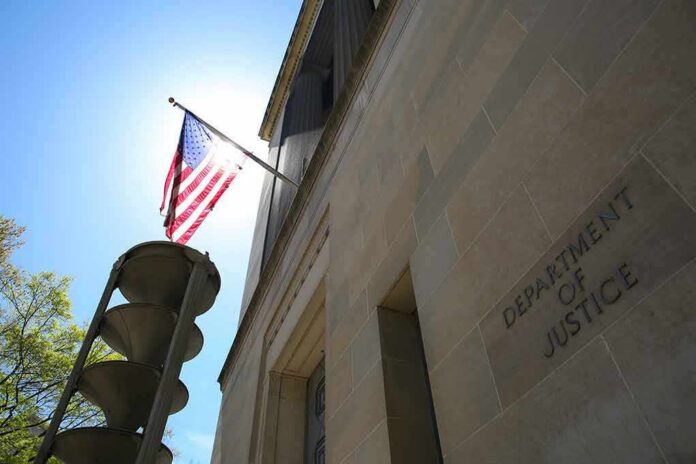
President Trump and Vice President JD Vance announced a Fraud Whistleblower Incentive Program that pays the public for tips that lead to a fraud conviction or a significant federal enforcement action. The White House described a $25 million initiative administered by the United States Department of Justice, with submissions routed through fraud.gov. The plan links rewards to outcomes, not rumors. That design aims to focus effort on facts that prosecutors can use in court and to protect taxpayers from false claims.
Trump and Vance framed the program as a way to reach fraud that normal oversight can miss. They said anyone can submit, including journalists, and discussed a one percent commission idea to motivate people with real evidence to come forward. The message was simple: if your information proves fraud and the government acts, you can get paid. That approach reflects a core conservative goal—turning citizens into partners who help secure honest government with clear, measurable results.
How The Reward Works And Where Details Still Need Clarity
Coverage from Associated Press affiliates and local outlets reported a reward of up to $30,000 for tips that lead to convictions or major enforcement actions. Trump and Vance also talked about a one percent commission, citing large-dollar examples to show the stakes. Reports did not reconcile the commission idea with the $30,000 figure or specify which rule controls awards. Outlets identified the Justice Department as the administrator but did not cite the formal legal authority or spelled-out adjudication process.
Vice President Vance presented a $10,000 check to YouTube commentator Nick Shirley and described it as the program’s first payment. Minnesota Public Radio linked the award to Shirley’s widely shared video about alleged fraud in Minnesota. The reports did not supply a charging document or final recovery tied to that specific case. The public takeaway is that the administration wants to show momentum while the Department of Justice builds out the intake and award pipeline.
Link To Long-Standing Whistleblower Practice
The plan sits beside a long-running model: the False Claims Act. That law lets private citizens file civil fraud suits on the government’s behalf and pays successful whistleblowers a share of the recovery, often between 15 and 30 percent. The Department of Justice has reported billions in annual False Claims Act settlements and judgments, showing that cash-for-information systems can recover real money for taxpayers when leads are strong and cases are well-built. Those results create a baseline for what a focused fraud tip system can deliver.
Trump and Vance pitched their initiative as targeting fraud outside the False Claims Act’s normal coverage and as a faster on-ramp for citizens who have hard evidence but not a full lawsuit. If the new program channels credible tips early to investigators, it could speed audits, cut losses, and narrow the gap between suspicion and proof. That supports a core conservative aim: smaller losses, tighter books, and more trust that every tax dollar is guarded, not given away.
What Comes Next For Taxpayers And Tipsters
The big practical step is simple: file at fraud.gov with specific documents, dates, and names so investigators can act. Strong tips should point to records, contracts, or payments that show fraud, not just opinions. The administration signaled it wants volume but will only pay when a case lands with a conviction or a significant enforcement action. That standard rewards truth and deters noise, putting the focus on facts that can stand up in court and return money to the Treasury.
**Trump just put a 1% bounty on proven fraud recoveries, turning citizens and reporters into paid auditors of taxpayer theft.**
**1. The Frame**
What people think this is about: A straightforward new tool to crowdsource fraud detection and recover stolen public money through…— GrumpyNews, emotionally clean news. (@GrumpyNews_) October 21, 2026
Two signposts will matter. First, published rules from the Department of Justice can define what counts as a qualifying tip, how awards are set, and how journalists are treated under the program. Second, regular public reporting on tips, prosecutions, recoveries, and award totals can show whether taxpayers are winning. If the data show net recoveries rising and waste falling, this citizen-powered approach will mark a clear victory for accountability and for families who demand honest government.
Sources:
thegatewaypundit.com, wbaltv.com, ms.now, upi.com, mprnews.org, nbcdfw.com, mynews13.com, wctv.tv, mediaite.com