

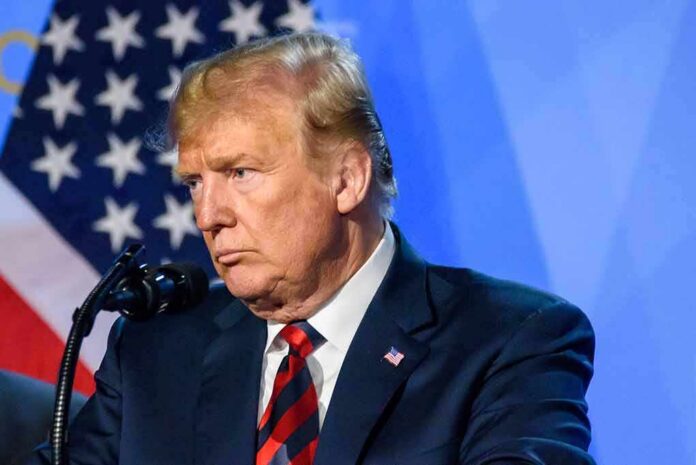
Trump signaled he might step in to back a House Republican leader only if a deadlock drags on, while urging members to settle it themselves.
Story Highlights
- President Trump said he might endorse if House Republicans reach an impasse.
- Trump also said he expects the conference to choose a leader without him.
- Jim Jordan and Steve Scalise are the leading candidates to be House Republican leader.
- House Republican leadership elections are decided by secret ballot in the conference.
Trump’s Conditional Role in the Leadership Fight
President Trump said he might endorse a candidate for House Republican minority leader if members cannot agree, but he expects Republicans to pick a leader on their own. He made clear the endorsement option is a backup, not the plan. That approach signals respect for the conference’s process while keeping leverage if talks stall. Reports this week also noted Trump said he would stay out for now, underscoring the conditional nature of any move.
House Republicans face a choice between Judiciary Chair Jim Jordan of Ohio and Majority Leader Steve Scalise of Louisiana. Both men have long aligned with conservative priorities and have ties to Trump’s agenda, which centers on border security, energy independence, and cutting red tape. Their contest reflects a debate over style and strategy more than policy. Each contender is courting members who want a sharper, clearer opposition to the left’s agenda after recent setbacks.
How The Conference Will Choose Its Leader
House Republican rules set leadership elections inside the party conference, not the full House. Members vote by secret ballot, and no proxy ballots are allowed. That process protects lawmakers from outside pressure and makes personal relationships and trust matter. The rules also reinforce that endorsements cannot cast votes. They can only shape how members think about unity, future access, and the direction of the party’s message and oversight plans.
Because the vote is closed-door and private, influence looks different than in public campaigns. A well-timed nod from a president can signal where donors and voters might lean, but it cannot replace the math inside the room. That is why Trump’s message matters: he kept the door open for action if needed, yet told Republicans to carry the load themselves. That balance respects limited government and the party’s internal right to decide.
What’s at Stake for Conservatives
House Republicans need a leader who will fight runaway spending, secure the border, and push back on the left’s culture agenda. The next leader will set the tone on oversight, defense of constitutional rights, and energy policy. A clear plan is vital to stop the growth of government and to reset discipline on the budget. After years of high prices and open-border chaos, the conference must speak with one voice that puts families, safety, and American workers first.
Republicans have a choice: learn from 2026 or repeat it in 2028. #GOP #MidTerms #AmericaFirst https://t.co/K56n63Lflk
— Richie⚾️🏛🏈Ba〽️bara🇺🇸🇮🇹 (@richie_bambara) November 5, 2026
Trump’s conditional stance serves a purpose. He leaves room for members to own the decision, which can strengthen the winner’s mandate. If a stalemate forms, his endorsement could break it quickly and prevent drift. Either way, the goal is the same: rally conservatives around a leader who can check the left, defend the Constitution, and sharpen a blueprint to win back ground. The conference now must choose the messenger and the method to deliver that plan.
Sources:
thegatewaypundit.com, politico.com