
CNN’s latest “fact-check” tries to erase years of tough Trump bargaining with South Korea by reducing a complex cost-sharing fight to a gotcha headline.
Story Highlights
- CNN says Trump’s account of South Korea cost-sharing is wrong, citing past agreements and 2021 documents.
- Special Measures Agreements have existed since 1991 and set how Seoul funds U.S. troop support.
- Under President Trump, Seoul’s share rose with an 8.2 percent bump in a one-year deal.
- The Biden team later signed a five-year pact with higher Korean payments, not a cancellation.
What CNN Claimed And Why It Matters
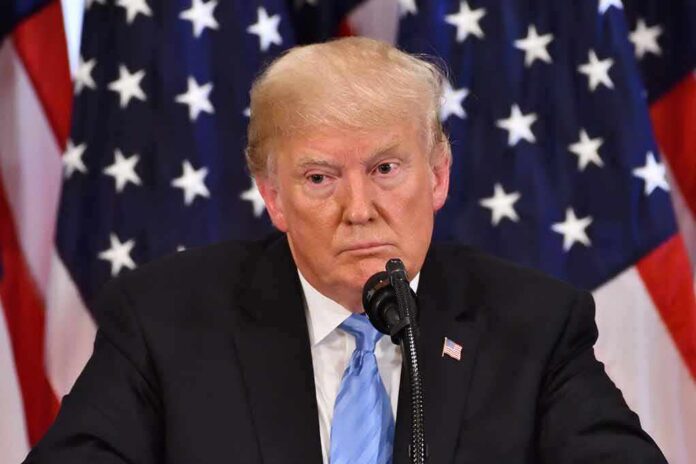
CNN’s Daniel Dale said President Trump was wrong about South Korea’s payments and a supposed $3 billion deal. He argued Seoul had paid for decades, that Trump got less than $1 billion in a one-year increase, and that President Biden did not cancel a Trump pact because it had lapsed by 2021. This framing invites readers to dismiss Trump’s pressure campaign as fiction. But the public record shows real increases, long-running talks, and formal deals that are easy to verify in government texts.
Cost-sharing is not a Twitter argument. It is a legal and budget process spelled out in Special Measures Agreements. These documents detail how the Republic of Korea covers parts of construction, logistics, and labor to support U.S. forces. The 2021 agreement text, posted by the United States Department of State, confirms South Korea’s role and the timeline in force, with effect back to 2020. That history is key when media frame a single sound bite as the whole story.
What The Documents And Records Actually Show
Government records show Special Measures Agreements began in 1991 and have set cost-sharing terms ever since. During President Trump’s first term, Washington pressed allies to pay more of their fair share. Reporting at the time noted a one-year deal in 2019 where Seoul agreed to an 8.2 percent increase, which moved the needle but did not end the debate. The Biden team later reached a five-year pact in 2021 with a larger step-up in Korea’s payments, about 13.9 percent over the 2019 level, according to Congress’s research arm.
Put simply, Seoul has long paid. Trump pushed for more. Negotiations continued. Then a new multi-year pact locked in higher contributions after the one-year deal expired. That sequence fits how alliance bargaining usually works. Leaders set goals in public. Teams hammer out won-based formulas in private. The end product lands in legal text and budget lines, not campaign-style totals. The official 2021 document shows continuity in burden sharing, not a break.
The Real Stakes For American Taxpayers
Conservatives want allies to shoulder more so American families are not stuck with the bill. The Government’s own materials and neutral summaries confirm South Korea’s payments have risen in recent years, through formal agreements, not handshakes. Media pieces that say “everything was wrong” risk blurring that bottom line. The practical win for taxpayers is movement toward higher allied support. The debate over who claims credit should not hide that measurable trend shown in official records.
Accurate history matters because it shapes future talks. If allies think Washington’s pressure brings no gains, they stall. If they see that steady pressure plus clear targets brings higher funds, they move. Trump’s approach stressed fairness and leverage. The documented increases since 2019 reflect a broader pattern of hard bargaining that serves U.S. interests when it results in real, bankable commitments in writing.
How To Read The Headlines Without The Spin
Readers should separate three things. First, the long-standing system: Special Measures Agreements set who pays what and when, and they have existed since 1991. Second, the negotiation cycle: talks lapse and resume, and bridge deals can expire. Third, the results: South Korea’s payments rose in 2019 and then rose again under a five-year agreement in 2021, meaning the cost burden on U.S. taxpayers eased at the margin. Those are facts backed by public documents.
Trump said South Korea essentially wasn’t paying for the US military presence before he became president. It was paying more than $800M per year in Obama’s second term and had been participating in cost-sharing deals since 1991.
Trump said he got South Korea to pay $3B a year…
— Daniel Dale (@ddale8) August 17, 2026
Media outlets can argue over a quote’s precision. But their own cited sources show the alliance did not backslide on burden sharing. It moved forward in steps, including during and after Trump’s first term. For conservatives who demand fiscal sanity, that direction matters most. Keep the focus on written pacts, rising allied payments, and policies that protect America’s strength without writing blank checks abroad.
Sources:
mediaite.com, cnn.com, state.gov, thehill.com