

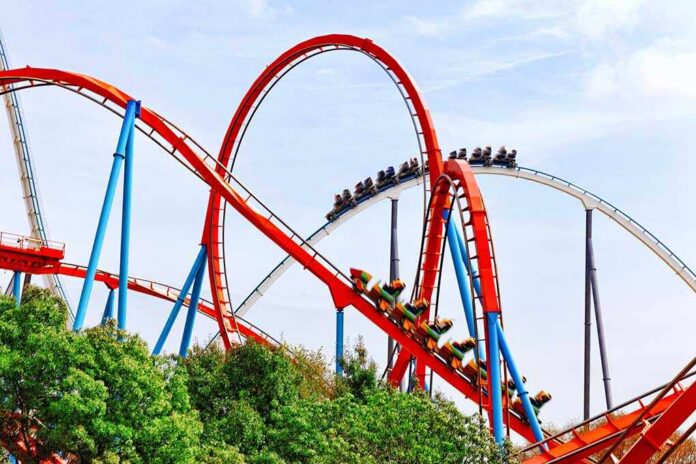
Three new lawsuits say Six Flags Magic Mountain’s X2 left riders with traumatic brain injuries, as more than 100 others report similar harm over the last two years.
Story Highlights
- Three fresh lawsuits allege catastrophic brain injuries tied to the X2 coaster.
- Attorneys say more than 100 additional riders have come forward with similar claims.
- Six Flags says X2 is inspected daily and that normal riders should not suffer brain injuries.
- The ride has been closed since mid-July while state regulators review it.
Lawsuits Accuse X2 of Causing Severe Brain Trauma
Attorneys announced three new lawsuits claiming Six Flags Magic Mountain’s X2 roller coaster caused catastrophic brain injuries to riders. The filings add to a growing pile of claims, with more than 100 people now reporting injuries consistent with rapid acceleration and deceleration on the ride. Court records and media reports also link X2 to past severe cases, including deaths and emergency surgeries, underscoring why families and lawyers argue the ride presents an ongoing safety risk.
Lawyers say the pattern is not a fluke but a signal of design or maintenance problems. They argue the forces on X2 can whip a rider’s head into the restraint, causing brain bleeds and lasting cognitive harm. A Los Angeles law firm said over 100 additional riders have stepped forward beyond the three new plaintiffs, with more cases expected. These filings seek answers in court and push for full disclosure of inspection logs, incident reports, and engineering data.
Park Response and Regulatory Review
Six Flags has declined to comment on the active litigation. The company states that X2 undergoes daily checks and multiple layers of safety review, including third-party and state oversight. In court, Six Flags has argued that a normal rider who follows instructions should not suffer a traumatic brain injury and that amusement rides involve inherent risks that guests accept when they board. The park confirms X2 has remained closed since July 12 amid an active state inspection.
California’s ride safety rules require operators to report serious incidents and preserve records for regulators. Investigations typically examine maintenance logs, rider warnings, restraint design, and the actual forces produced during the ride cycle. This structure shifts many disputes to engineering questions and causation, where plaintiffs seek detailed records that parks and manufacturers control, and where expert opinions can clash in court.
Competing Expert Views and What Comes Next
Media coverage shows a split between plaintiffs’ medical accounts and defense engineering claims. Surgeons have linked certain riders’ acute brain bleeds to rapid acceleration and deceleration on X2. Defense filings, however, cite biomechanical analysis that says the ride’s forces should not cause such injuries in riders who use the attraction as instructed. Multiple prior cases ended in settlements before trial, leaving engineering debates unresolved in public view.
Legal Lens: Over 100 people are suing Six Flags after suffering brain injuries on the X2 roller coaster. 😔
If you rode X2 and experienced headaches, memory problems, or any head injury, get checked out and document it. The conversation with us is always free.… pic.twitter.com/MekDRE2VOu— Chain | Cohn | Clark (@chainlaw) September 24, 2026
Families want accountability and transparent data, not spin. If more than 100 people say a single ride caused brain trauma, common sense says regulators and courts must see every record, test, and safety change. Personal responsibility matters, but so does full disclosure when patterns appear. Parents should be able to take their kids to a theme park without guessing at hidden risks. Until findings are public and fixes are proven, keeping X2 closed looks prudent for riders and the park alike.
Sources:
washingtontimes.com, cnn.com, latimes.com, news.sbs.co.kr, dordicklaw.com, ibtimes.com.au, tmz.com