
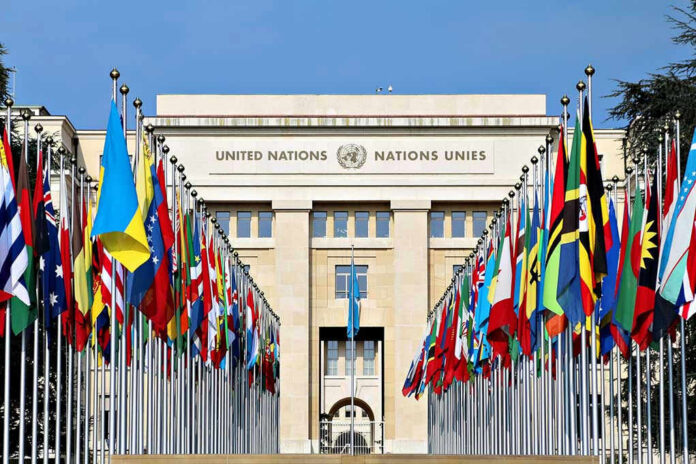
At the United Nations, President Trump again rejected globalism and declared that strong nations set the terms of peace.
Story Highlights
- Trump told world leaders that America rejects globalism and embraces patriotism.
- Speeches stressed national sovereignty, tough leverage, and bilateral deals over global bureaucracy.
- Analysts describe a consistent, sovereignty-first style across multiple UN addresses.
- Theme fits conservative goals: secure borders, reliable energy, and fair trade on America’s terms.
Trump’s Message: Sovereignty Over Globalism
President Trump used his United Nations addresses to make a clear point. He said nations must guard their own people, borders, and resources. He said the United States will not hand power to unaccountable global bodies. In plain words, he said America “rejects the ideology of globalism” and “embraces the doctrine of patriotism,” setting the tone for a sovereignty-first agenda before world leaders. That stance matched what many voters wanted after years of costly global experiments.
Trump’s speeches told allies and rivals that Washington will judge deals by one standard: the national interest. He favored direct, country-to-country talks over broad pacts that tie America’s hands. He pushed for fair trade, secure borders, and energy policies that put American workers first. This approach aimed to stop free riders and make those who seek access to the U.S. market offer real reciprocity. It also warned hostile regimes that power comes with responsibility.
How This Doctrine Worked in Practice
Trump backed tough words with concrete tools. He used tariffs to demand better trade terms and sanctions to punish rogue behavior. He tied aid and access to performance, not promises. At the United Nations, he paired those steps with a call for independent nations to deal honestly and keep their own houses in order. The aim was simple: reduce endless wars, cut elite meddling, and focus on outcomes that protect American families and jobs first.
Supporters point to the results of pressure campaigns and sharper bargaining. They argue that stronger borders lower crime and trafficking. They say reliable domestic energy lowers prices and makes America less dependent on unstable regions. They believe bilateral deals keep U.S. leverage strong, while large, slow global forums often dilute it. Critics who prefer sweeping multilateral rules objected, but Trump’s team saw those rules as a path to lost sovereignty and weak enforcement.
A Consistent Theme Across UN Addresses
Reporters and scholars noted a pattern across Trump’s UN speeches. They described a stable style based on sovereignty, national pride, and hard-nosed negotiation, not an isolated line or one-off moment. Analyses of multiple appearances found repeated stress on borders, religious freedom, fair trade, and the right of each nation to set its own course without global micromanagement. That record matches the “America First” doctrine his voters endorsed at home.
President Trump to the world at the UN “to the victor belongs the spoils”. This organizing principle and doctrine seems to be replacing the rules based international order. This will
Not build a peaceful world and those in the UNGA Hall got the message. It was written on their… https://t.co/5P6RxEkUW7— Amal Mudallali (@AmbMudallali) September 23, 2026
Several outlets documented how often Trump emphasized “sovereign” and related ideas in these addresses, reflecting a clear break from globalist talk of prior years. This was not chaos or drift. It was a governing choice. The White House signaled that free nations cooperating as equals beat top-down schemes imposed by remote councils. For conservatives worried about overreach, gun control by treaty, or climate rules that spike energy bills, that message landed as both common sense and overdue.
What It Means for American Families
Trump’s UN stance ties global policy back to kitchen tables. Fair trade seeks better jobs and pay. Secure borders defend communities and stop drugs. Reliable domestic energy helps lower bills and keeps the lights on during shocks abroad. A strong military deters wars we do not want to fight. And keeping decision-making in Washington, not in distant halls, protects the Constitution from creeping mandates dressed up as global norms. The principle is simple: accountability starts at home.
Sources:
theamericanconservative.com, politico.com, rev.com, millercenter.org, trumpwhitehouse.archives.gov