
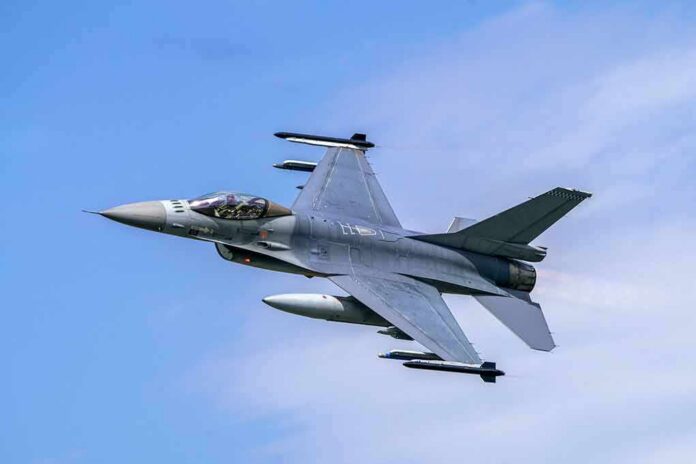
A Texas Air National Guard F-16 crashed during training in Michigan, and the pilot survived after ejecting safely.
Story Highlights
- Officials said the F-16 crashed during a routine training flight, and the pilot ejected safely.
- The pilot received medical care at a local hospital, and authorities reported no ground injuries in initial updates.
- The Texas Air National Guard identified the jet’s mission as a standard training sortie from Alpena’s readiness center.
- The cause remains under investigation, which is standard after a military aviation mishap.
Confirmed Crash Details From Military and State Officials
Texas Military Department officials said an F-16 with the Texas Air National Guard’s 149th Fighter Wing went down in northern Michigan during a routine training exercise, and the pilot ejected before impact. Michigan State Police updates said the pilot was stable at a local hospital, and early reports showed no other injuries tied to the crash site. Authorities said the incident triggered a standard emergency response, while the military secured the area and began its review.
Texas Air National Guard statements identified the sortie as a training mission from the Air National Guard’s Combat Readiness Training Center in Alpena, Michigan. Officials described the event as a mishap during training, not a combat operation. The service opened a formal investigation, which is the normal next step in any crash. Leaders said more details would follow after safety teams gather data and interview the pilot and witnesses.
Pilot Condition and Immediate Safety Actions
Officials said the pilot ejected, survived, and received medical care, which follows standard safety protocols for fighter emergencies. Local responders supported scene security and public safety steps, including checks for hazards around the wreckage. Early statements reported no injuries on the ground. That outcome matters for nearby families and property, and it shows why quick ejection decisions and clear local coordination save lives when seconds count.
Air National Guard and local authorities followed a set playbook to protect the community and preserve evidence for investigators. Teams locked down the site, monitored air and ground risks, and coordinated with base officials handling the aircraft’s recovery. The Guard’s public affairs office confirmed that updates would be limited until safety boards finish their early work. That process protects accuracy and helps leaders fix any issues found.
How Fighter Ejections Work and Why Training Risks Persist
United States Air Force accident reports show the Advanced Concept Ejection System, known as ACES II, is designed to save pilots across many flight conditions when used within its limits. Past board findings detail how the seat sequences, canopy separation, and recovery steps function in fractions of a second. Those systems, plus pilot training, explain how aviators can survive even low-altitude emergencies that give them little time to act.
Pilot ejects in F-16 crash in Germanyhttps://t.co/7FdIP8cYFI
— Jeremiah Kennedy (@sirjkennedy) September 23, 2026
Air and Space Forces reporting notes recent F-16 training incidents but says the service does not see broad fleet safety issues, underscoring that risk comes with high-performance flight and that investigations drive fixes where needed. Typical probes examine maintenance records, engine data, weather, and cockpit actions. Results can point to pilot error, mechanical failure, or both. Until those findings are public, officials keep to confirmed facts: the ejection worked, the pilot lived, and the cause is under review.
Sources:
cnn.com, abcnews.com, stripes.com, 13abc.com