
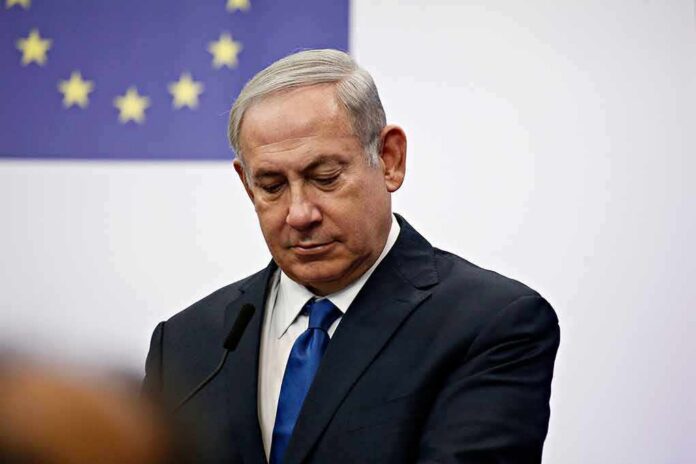
A secret, on-base meeting between U.S. Defense Secretary Pete Hegseth and Israeli Prime Minister Benjamin Netanyahu signals tight U.S.-Israel security coordination as Iran tensions rise.
Story Highlights
- Hegseth met Netanyahu at Ovda Air Base in southern Israel, per multiple outlets.
- The trip came eight days before Israel’s election amid Iran war concerns.
- Hegseth also addressed American service members during the visit.
- Officials released no public readout of the meeting’s agenda.
Confirmed Meeting At Military Air Base
Axios and CBS News reported that Defense Secretary Pete Hegseth met Prime Minister Benjamin Netanyahu at Ovda Air Base in southern Israel. Reporters cited a senior United States military official and two sources familiar with the visit. The base hosts United States refueling planes and fighter jets. That placement points to a defense focus for the meeting and location. Hegseth’s office did not distribute a standard readout, and Israel did not publish a transcript. Both outlets kept the emphasis on the confirmed meeting itself.
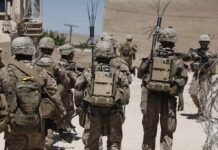
CBS reported that Hegseth confirmed he was in the United States Central Command area and shared a photo addressing United States service members. Axios reported he met troops at the air base. Those details show the trip had a military component beyond high-level talks. The Pentagon did not expand on mission details. The reports did not list an agenda, but the setting and troop engagement align with force protection and joint planning during a tense period in the region.
Timing And Iran Tensions Frame The Visit
Axios reported the visit came eight days before Israel’s election and as United States and Israeli officials discussed possible renewed operations against Iran. That timing placed the meeting inside an already heated security calendar. Israel’s election cycles and security decisions often move in parallel with threats. The outlets described the discussions on Iran as a backdrop rather than a confirmed topic of the Netanyahu-Hegseth sit-down. Ynet added that it was unclear whether another Iran strike was discussed.
Researchers have long noted that security crises and elections can overlap in Israel, but outcomes are not automatic or simple. Past work found that war can even reduce support for leaders, as seen after the 1973 Yom Kippur War, despite later battlefield gains. That history cautions against assuming political benefit from conflict. The present visit is best understood as documented contact between allies amid real threats, not proof of a pending decision or electoral play on its own.
What Is Known, And What Is Still Private
Reporters established three clear facts. First, Hegseth met Netanyahu at a military base used by United States aircraft. Second, Hegseth met with United States troops and spoke to them during the trip. Third, the visit occurred as Iran tensions ran high and ahead of Israel’s vote. There is no public readout listing agenda items or decisions. That means no public confirmation of policy shifts, new deployments, or operational orders came from this single meeting report.
Hegseth meets Netanyahu in unannounced Israel visit amid Iran war concerns https://t.co/B3CClTqgmN pic.twitter.com/8faZiVYbg0
— The National (@TheNationalNews) October 20, 2026
For American readers, the takeaway is straightforward. The Trump administration is keeping close contact with Israel’s leadership and with our service members in theater. Meeting on-base, near active aircraft, sends a clear message to Iran’s regime and its proxies. The United States is watching, coordinating, and ready to defend our people and our allies. That is deterrence through presence. It is also a reminder that strong borders and strong defense keep American families safer at home.
Why This Matters For U.S. Security And Values
Iran funds terror groups, threatens shipping lanes, and targets Americans and our partners. Coordinated planning with Israel helps stop attacks before they reach our troops or our shores. Conservatives expect a government that puts American lives first, spends defense dollars wisely, and refuses to bow to global bullies. This meeting fits that standard. It shows hands-on leadership, not press releases. It shows respect for our warfighters who stand guard each day far from home.
The lack of a public readout does not change the central fact that top leaders met at a live military hub. Operational privacy can protect our forces and allied assets. When Congress receives formal updates or when operations end, more details may follow. For now, the record points to steady, serious coordination. That is how peace through strength works: plan in private, deter in public, and keep faith with the men and women in uniform who carry the load.