
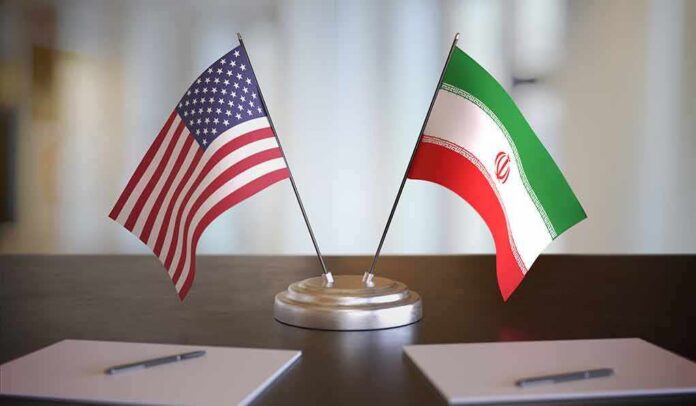
Iran’s president used the United Nations stage to blame America and Israel for “illegal attacks,” while insisting Tehran is only defending itself — and the United States delegation walked out.
Story Highlights
- Iran’s President Masoud Pezeshkian told the United Nations that Iran “has only defended” itself and is not a terrorist state.
- He blamed the United States and Israel for strikes on civilians and infrastructure and vowed no surrender under pressure.
- He said Iran remains open to talks but rejects “the language of force,” answering President Trump’s hard line.
- The United States delegation exited the hall during the remarks amid the sharp exchange.
Pezeshkian’s Claims at the United Nations
President Masoud Pezeshkian told world leaders in New York that Iran is responding to attacks and is not seeking war. He said, “We have only defended ourselves. We are not terrorists,” and blamed the United States and Israel for strikes on civilians and infrastructure. He cited images of dead children to press his point and pledged that any bombing of Iranian cities would bring a response. His remarks framed Iran’s posture as defensive and retaliatory.
He added that Iran remains open to negotiations but will not accept threats or coercion. He argued Iran’s nuclear work is peaceful and pointed to outside inspections, while accusing Israel of hiding nuclear weapons without the same scrutiny. He said Iran would not bow to pressure but wants a path to reduce tensions. The address fit a pattern where Tehran mixes hard lines with offers to talk when sanctions and force escalate.
Clash With President Trump’s Warning
President Trump had addressed the United Nations one day earlier, warning he could “annihilate” Iran if it refuses a deal to end the conflict and stop a nuclear weapon. He urged nations to tighten Iran’s isolation. Pezeshkian answered that Iran would not surrender and denounced what he called a “bullying mentality.” The back-to-back speeches underscored the standoff: maximum pressure from Washington, paired with Tehran’s vow to hit back while leaving a door to talks open.
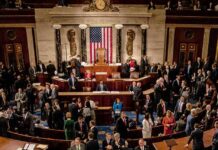
United States officials signaled displeasure inside the hall. The United States delegation exited during Pezeshkian’s remarks, joining a familiar United Nations scene where walkouts mark protest. The visual split — a tough warning from Washington, a defiant reply from Tehran, and empty United States seats — highlighted how the General Assembly stage amplifies confrontation even as both sides speak of possible diplomacy.
What the Speech Means for U.S. Policy
The speech tried to shift blame for regional violence onto the United States and Israel while casting Iran as restrained. That claim runs head-on into President Trump’s policy, which treats Iran’s network of armed proxies and missile work as core threats. Trump’s team argues that strong pressure protects Americans, allies, and global trade. The Iranian leader’s vow to answer any strike confirms deterrence is real on both sides, which raises risks if talks stall or missteps occur.
For conservative readers, the stakes are clear: a regime accused of sponsoring terror is asking the world to trust its “defense” story, while demanding fewer consequences. The administration’s job is to hold the line, keep our troops safe, back Israel’s right to exist, and stop a nuclear breakout. Clear terms, strict verification, and zero tolerance for attacks on civilians remain the guardrails. Offers to negotiate matter only if deeds match words and missiles stay silent.
Sources:
foxnews.com, cnbc.com, tribune.com.pk, denvergazette.com, apnews.com, webtv.un.org, independent.co.uk, abcnews.com