
After the House passed it, Senate roadblocks now threaten a bill that simply requires proof of citizenship to vote in federal elections.
Story Highlights
- The SAVE America Act requires documentary proof of U.S. citizenship to register and photo ID to vote in federal elections.
- The House approved the bill 218-213; nearly all Democrats opposed while Republicans backed it.
- Senator Mike Lee says the Senate could pass the bill with sustained debate, despite procedural blocks.
- Opponents claim the plan would disenfranchise eligible voters; backers say it closes an obvious loophole.
What The SAVE America Act Would Do, In Plain Terms
Congressional text says the bill would require people to show proof of U.S. citizenship when registering to vote and show photo identification when voting in federal elections. The bill lists specific documents that count, such as a United States passport or a REAL ID driver’s license that indicates citizenship, among other options. Supporters argue this makes a clear, national floor for federal races. They say basic proof at registration plus photo ID at the polls protects every legal vote and strengthens trust.
The measure focuses on federal elections and sets uniform rules states must follow. It aims to tighten screens at the front door of voter rolls. Backers point to confusion in current systems, where noncitizens can slip onto rolls through motor vehicle transactions or data errors. They argue this is not about blocking legal voters. It is about stopping illegal registrations before ballots are issued and ensuring one standard simple check for everyone who signs up.
House Passage Shows Momentum, But Senate Procedure Stalls Action
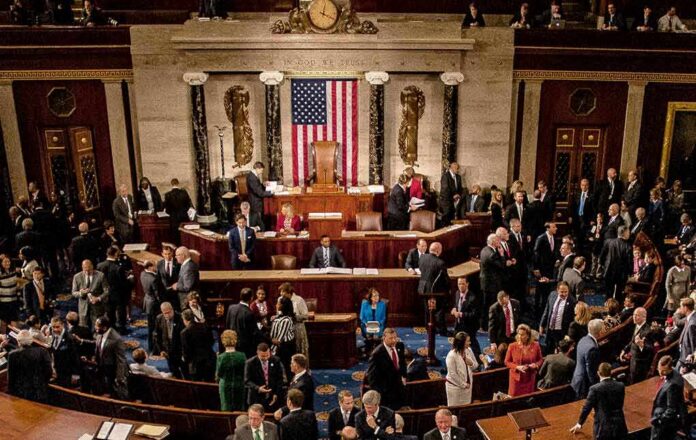
The House approved the SAVE America Act by a 218-213 vote, with Republicans united and almost all Democrats opposed, sending the Trump-backed bill across the Capitol. In the Senate, the bill has met delays tied to debate limits and vote thresholds. Reports said a recent try to attach it to a fast-track bill failed by a single vote, keeping it off the finish line. The Senate’s rules allow a minority to stall action unless leaders commit floor time and votes to push through.
Senator Mike Lee says the votes exist if the chamber holds debate to the end and forces decisions. He urged leaders to keep the Senate in session and move the bill, saying, “Debate it until it passes” and expressing confidence a simple majority could approve it. His stance reflects a wider push from conservatives who see election integrity as a top issue. They argue that, after years of controversy, public confidence needs a firm federal standard for federal contests.
The Core Disagreement: Safeguards Versus Barriers
Democratic leaders argue the bill would make it harder for eligible citizens to register and vote. Senator Alex Padilla said audits show ineligible immigrant voting is exceedingly rare, and he warned that document demands could disenfranchise millions who lack easy access to passports or birth records. He also said many Americans do not carry those documents and that current systems already work, so the extra layer is unnecessary. This is the central line of opposition repeated across Senate statements and media summaries.
Supporters answer that citizenship is the baseline for federal voting and that clear, uniform proof protects everyone. They note the bill’s document list is specific and includes multiple paths to verify status, not only a passport. They add that most Americans support voter ID in principle, even as parties split over details. The debate now turns on execution: can states verify citizenship without burdening lawful voters, and can Congress set a fair national rule for federal races while respecting state systems?
Why This Matters For Constitutional Self-Government
The Constitution entrusts citizens with the power to choose their leaders. That power weakens if noncitizens can register by mistake or fraud. Senator Lee said current bans on noncitizen voting are hard to enforce under today’s patchwork, which leaves gaps at registration that later ripple into mail ballots and polling books. The SAVE America Act seeks to close those gaps by checking citizenship at the start and requiring photo ID at the ballot box for federal elections.
Governing well means preventing problems before they spread. The House has acted. The Senate now faces a test of priorities. Backers argue this is a common-sense fix that should not be partisan: citizens vote, noncitizens do not. Opponents warn of access risks. The legislative record confirms what the bill does and where it stands. The choice ahead is whether the Senate will spend the floor time to prove that election integrity and voter access can both be protected in clear law.
Sources:
whitehouse.gov, govinfo.gov, lee.senate.gov, rules.house.gov, nbcnews.com, foxnews.com, newsmax.com, deseret.com, padilla.senate.gov