
After a judge lifted her own nationwide block, left-wing groups rushed back to court to stop common-sense Postal Service ballot safeguards for 2026.
Story Highlights
- A federal judge first blocked parts of the mail-voting plan, then narrowed relief after new rulings.
- Activist groups now target the finalized Postal Service rule tied to President Trump’s order.
- States suing claim the rule burdens elections, while supporters say it improves tracking and security.
- The court fight will shape how mail ballots are marked, tracked, and audited this November.
What sparked the new courtroom rush
On August 11, a federal court issued a preliminary injunction that blocked the United States Postal Service from implementing part of President Trump’s 2026 executive order on mail voting for the November midterms. On August 21, the Postal Service published a final rule that sets uniform ballot-mail standards and data submissions. A judge then said the agency violated an order by issuing the rule but declined to block it immediately, leaving the substance to further litigation.
Voting-rights groups quickly moved to add direct claims against the finalized rule. They asked the court to stop the Postal Service from using it for the 2026 election, arguing it conflicts with federal privacy and voting laws and the agency’s own statute. The American Civil Liberties Union also argued the final rule defied the earlier injunction’s limits, by “implementing” the order and “completing rulemaking” for 2026 elections despite the court’s block.
What the rule would change for mailed ballots
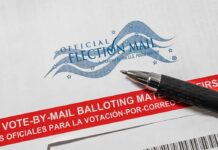
The Postal Service says the rule would standardize ballot envelopes and require official Election Mail markings. It would require a unique Intelligent Mail barcode on outbound and return envelopes and a Postal Service design review to support automated processing. The agency says it would not open ballots or log party data, but it would retain exterior envelope data to help enforce law and aid law enforcement when needed. Supporters argue this creates a nationwide audit trail to reduce fraud risks.
The Postal Service also described how the system could work with voter lists and barcodes to count how many ballots were sent and compare with returns, flagging issues for investigation. Plaintiffs counter that the rule would force states to send lists of mail voters well before Election Day and to load voter details into a new Postal Service database on a tight timeline, risking errors and access problems for eligible voters. Courts have not ruled on the merits of those claims yet, and the record does not include final numbers on voters who might be affected.
The legal trench lines and what each side is arguing
State attorneys general aligned with the activists say the final rule is unconstitutional, outside the Postal Service’s authority, and harmful to election planning. They point to privacy risks and new administrative steps that local offices cannot complete in time. A Wisconsin filing describes a requirement to send a list of mail voters 60 days before the election and to place eligible mail voters into a Postal Service database, calling the timeline “impossible”. Those claims remain contested in court.
The Trump administration defends uniform standards as normal mail operations that protect the chain of custody. President Trump’s executive order directed the Postmaster General to start rulemaking to protect the integrity of mailed federal ballots and require unique barcodes to improve tracking and accountability. The Postal Service argues the rule improves ballot tracking, helps law enforcement stop crime, and reduces fraud risk, while leaving voter eligibility decisions to state officials, not Washington.
Why this fight matters for election integrity and trust
November is close, and stable rules build trust. Standard envelopes, clear logos, and trackable barcodes help voters and officials know where a ballot is in the mail stream and whether it arrived on time. That transparency supports the will of lawful voters and deters bad actors. Activist lawsuits seek to stall these steps, claiming burden and privacy risk without showing concrete voter harm so far in the record provided. Courts will weigh timing and authority as much as policy.
The uncomfortable truth is that this argument that they are pushing is that it is being presented as though the legal question has already been decided. It hasn’t. The USPS rule is real, and it does impose new requirements involving voter lists, ballot-envelope specifications,…
— Stan Off Script (@StanOffScript) August 27, 2026
Conservatives want secure elections with simple, fair guardrails. The Postal Service rule moves in that direction by making every federal ballot traceable from send to return. That is common sense for any system that handles votes by mail. The legal back-and-forth will continue, but the core question is clear: will we allow uniform standards that protect ballots for all voters, or will last-minute suits keep election systems fragmented and weak? The country needs clarity now.
Sources:
thegatewaypundit.com, aclu.org, cpr.org, axios.com, reuters.com, oag.ca.gov, abc7.com