

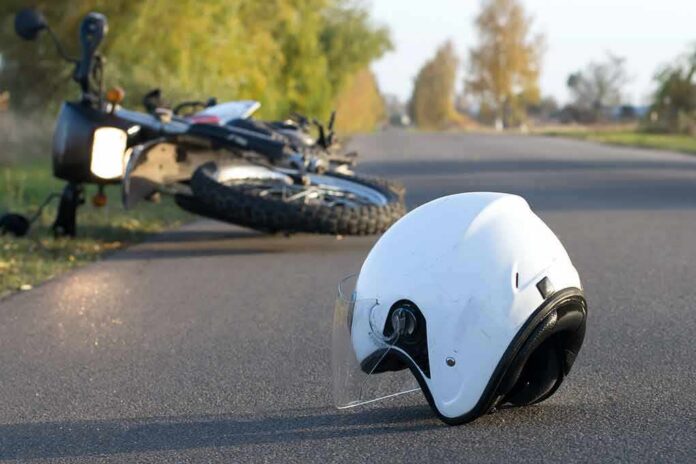
Orange County prosecutors charged two parents after their 13-year-old son died in a high-speed e-motorcycle crash, turning a family tragedy into a criminal test of parental responsibility.
Story Highlights
- Prosecutors charged the father with felony child endangerment and the mother with a misdemeanor
- Officials say the 13-year-old hit over 40 mph, ran red lights, and did wheelies before the crash
- The boy died May 7 in Garden Grove after striking a center divider or pole
- The case lands amid a broader Orange County push to charge parents in youth e-motorcycle incidents
What Prosecutors Filed And Why It Matters
Orange County District Attorney Todd Spitzer announced charges against Vu Thanh Nguyen and his wife, Hong Cuc Thi Nguyen, after their son, Benson, died in a Garden Grove crash on May 7. Prosecutors charged the father with felony child endangerment and a misdemeanor count for contributing to the delinquency of a minor. They charged the mother with misdemeanor child endangerment. The filing sets a formal record that the state believes it can prove criminal endangerment tied to the boy’s access to a high-powered e-motorcycle.
Officials said Benson exceeded 40 miles per hour, ran red lights, and performed wheelies shortly before he lost control. Reports describe the vehicle as an off-highway e-motorcycle, not a standard bicycle, and in some accounts as an E-Ride Pro SS 2.0. The teen allegedly reached about 43 miles per hour. The crash happened in Garden Grove when the motorcycle struck a center median or a concrete pole, causing fatal injuries. Those specifics form the basis for the state’s claim of material danger.
The Alleged Prior Warning And Parental Conduct
Prosecutors allege the father bought a faster, more powerful e-motorcycle even after Benson broke his leg on a different electric vehicle about six months earlier. That detail, if proven, goes to notice and judgment: what a parent knew and did anyway. The state also split the charges between the parents, signaling prosecutors see different roles in what led to the crash. Coverage has not detailed the exact conduct that supports the mother’s misdemeanor count.
Reporters did not publish the criminal complaint or affidavits, so readers have not seen the precise legal theory or the sworn facts behind each charge. News accounts summarize the state’s position and list the counts, but do not include the full filing or a defense response beyond noting the parents had not entered pleas at the time of reporting. The charges remain allegations that will be tested in court at arraignment and beyond.
How The Crash Happened, According To Reports
Garden Grove was the scene of the final ride. Reports state the 13-year-old lost control at speed and hit a center divider or concrete pole. The vehicle was described as an e-motorcycle that can reach high speeds, far above a typical e-bike class used on bike paths. That difference matters for safety, training, licensing, and where the device can legally operate. The reported conduct—red lights, speed, wheelies—paints a picture of clear risk on public roads.
Several outlets echoed the same timeline and details of the impact and injuries. One account cited approximately 43 miles per hour, which is car-traffic speed, not bicycle speed. That aligns with the prosecution’s view that this was not a toy, but a powerful machine placed in the hands of a young teen. The combination of speed capability and traffic signals created a scenario where any mistake could be deadly in a split second.
A Broader Crackdown On Underage E-Motorcycles
The case is part of a larger Orange County effort to charge adults tied to illegal or unsafe youth e-motorcycle riding. Since early 2026, the District Attorney’s Office has announced multiple prosecutions in cases involving injuries and deaths. The office also launched a dedicated unit to review e-bike and e-motorcycle incidents, citing a rise in serious crashes involving minors. Recent announcements added six more parents to the list of those charged in similar matters.
This trend shows a shift: officials are not only citing the young riders; they are holding parents accountable for purchases, permissions, and alleged failures to stop risky riding. Supporters call it common sense public safety. Critics worry about stretching criminal law into family decisions and accidents. What is clear is that prosecutors plan to use criminal charges to deter youth from high-speed riding on public roads and to push parents to set firm limits and demand training and safety.
Safety, Responsibility, And What Comes Next
Parents can take steps now. Know exactly what machine you are handing a child. High-powered e-motorcycles demand training, gear, and controlled settings—not neighborhood streets. Set rules on where, when, and how a teen rides, and enforce them. If a child shows risky behavior, shut down access until safety improves. Simple guardrails can prevent tragedy and avoid criminal exposure for the adults in charge.
In court, the state must prove its case against each parent beyond a reasonable doubt. The defense can challenge what each parent knew, what the law required, and what actually caused the crash. For now, the filings place the tragic loss of a 13-year-old at the center of a policy push on youth e-motorcycles. The legal process will decide fault. The lesson for families is immediate: powerful machines and young teens on public roads are a deadly mix.
Sources:
nypost.com, latimes.com, nbclosangeles.com, ocregister.com, cbsnews.com, abc7.com